
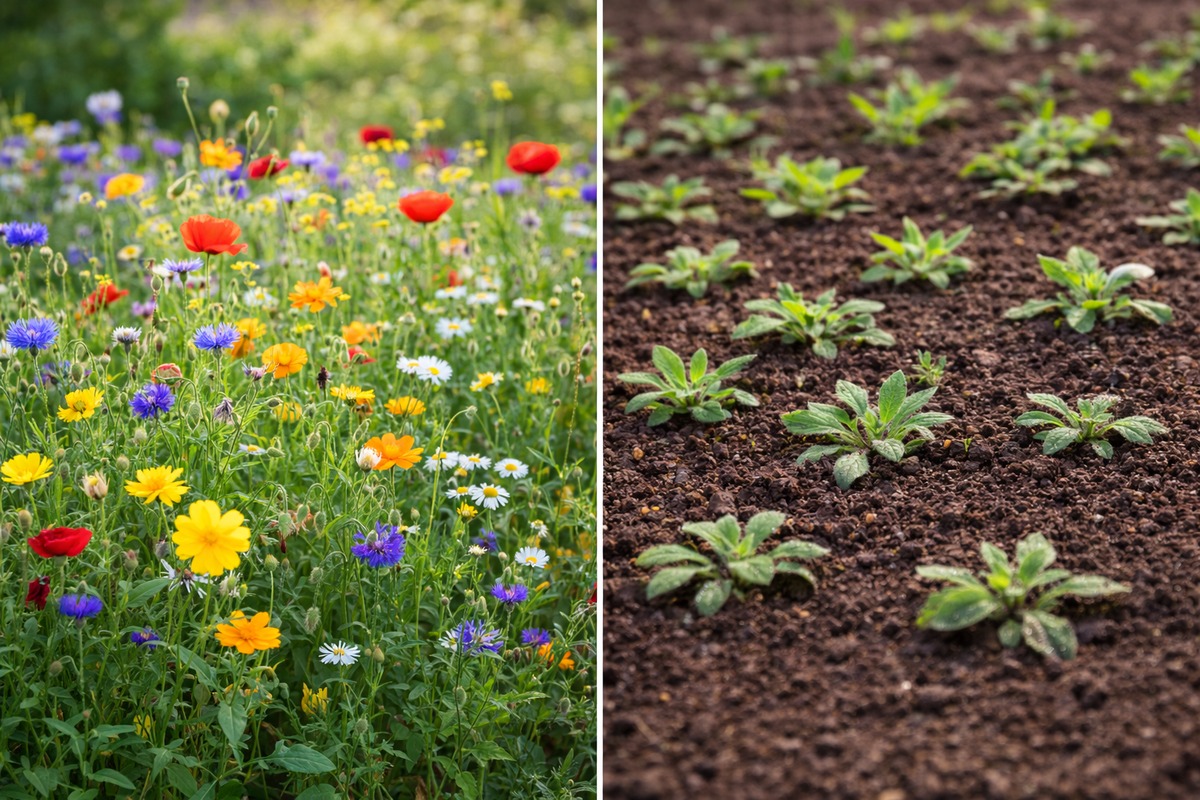
The #1 wildflower confusion: “Why didn’t it bloom?”
Most wildflower disappointment comes from one misunderstanding:
- Annual wildflowers grow fast and bloom the same year.
- Perennial wildflowers often build roots first and bloom better in year two.
If I sow a “perennial mix” and expect a full flower show in 8 weeks, I’ll be frustrated. But if I know what I planted, I can set the right expectations and plan for both quick wins and long-term success.
Annual wildflowers (fast color, short life)
Annuals complete their life cycle in one season:
seed → plant → flowers → seeds → done.
Why I love annuals
- quick blooms (often 6–12 weeks)
- great for filling bare spots
- easy to reseed if I let them drop seed
- good for first-year impact
Trade-offs
- they don’t return reliably unless they reseed
- they can look messy at the end of season (seed heads)
Best uses
- quick “wow” patches
- cut flowers
- first-year coverage while perennials establish
Perennial wildflowers (slow start, long payoff)
Perennials live for multiple years. Many focus on roots in year one.
Why I plant perennials
- they come back each year
- they support pollinators long-term
- once established, they’re lower maintenance
- they build a more stable “meadow” look
Trade-offs
- slower bloom timeline
- weed control matters more in the first year
- may need cold stratification or fall sowing
Best uses
- long-term pollinator gardens
- meadow-style patches
- low-maintenance borders (once established)
Biennials (the in-between category)
Some wildflowers are biennials:
- year one: leaves/rosette
- year two: flowers, then they often die
If a mix includes biennials, it can look “quiet” the first year.
What I plant for fast blooms (annual favorites)
If my goal is blooms this season, I focus on annuals and fast growers.
Examples of “fast impact” choices (depending on region):
- cosmos
- calendula
- cornflower (bachelor’s buttons)
- zinnias (often sold as wildflower-style)
- sunflower mixes (dwarf or branching types)
- poppies in some climates (timing matters)
My strategy: I choose a mix that clearly lists annuals and promises first-year bloom.
What I plant for long-term pollinators (perennial favorites)
For long-term, I look for perennial/native options appropriate to my region.
Examples often used in pollinator gardens (region-dependent):
- coneflower
- black-eyed Susan
- milkweed (host plant for monarchs, region-specific)
- bee balm
- coreopsis (some species are perennial)
- blazing star (liatris)
- yarrow (some types are perennial)
My strategy: I expect year two to be the real show.
How I mix annuals and perennials (my favorite approach)
If I want a patch to look good right away and improve each year, I mix them.
Option A: “Nurse crop” method
- sow perennials as my long-term base
- add annuals to fill and bloom in year one
Annuals give color while perennials build roots underneath.
Option B: Two-zone method
- one area: annuals for quick results
- second area: perennials for the future meadow
This keeps expectations clear and avoids the “why is this patch empty?” feeling.
Option C: Layered succession bloom
I try to include:
- early bloomers
- mid-season bloomers
- late bloomers
This supports pollinators longer and makes the garden look good for months, not weeks.
Timing differences: when I sow annuals vs perennials
Annuals
- usually spring sowing
- they want warmer soil and faster germination
- many bloom in the same season reliably
Perennials
- often fall sowing is easiest
- or spring sowing with cold stratification if needed
- germination can be slower and staggered
My shortcut:
Perennials often like winter to “wake them up.” Annuals usually just want warmth.
Year-one expectations (what I remind myself)
If I planted annuals
- I should see sprouts quickly
- blooms should appear in the same season
- patch should look colorful by mid-summer (depending on sow time)
If I planted perennials
- I may get leafy plants and only a few blooms
- the patch may look “green” more than “flower”
- year two is the payoff
This mindset prevents me from ripping things out too early.
Weed pressure: annuals vs perennials
Weeds matter for both, but especially for perennials in year one.
Why perennials need more weed attention early
Perennial seedlings are often slower. If weeds shade them, they can disappear.
So for perennial patches, I:
- prep the area well
- control weeds early
- keep expectations realistic
FAQ
Can I plant a wildflower “mix” and get both annuals and perennials?
Yes, but I check the label. Many “wildflower mixes” are mostly annuals because they look good fast. If I want long-term plants, I make sure the mix includes perennials and lists species.
Will annuals come back next year?
Some reseed if I let seed heads mature and drop seed. But it’s not guaranteed.
Which is better for pollinators?
Perennial/native wildflowers usually provide better long-term habitat. Annuals still help, especially for nectar and quick blooms.
Quick wrap-up
If I want blooms this season, I plant annuals.
If I want a low-maintenance pollinator patch for years, I plant perennials.
If I want both, I mix them: annuals for year one color, perennials for long-term success.