
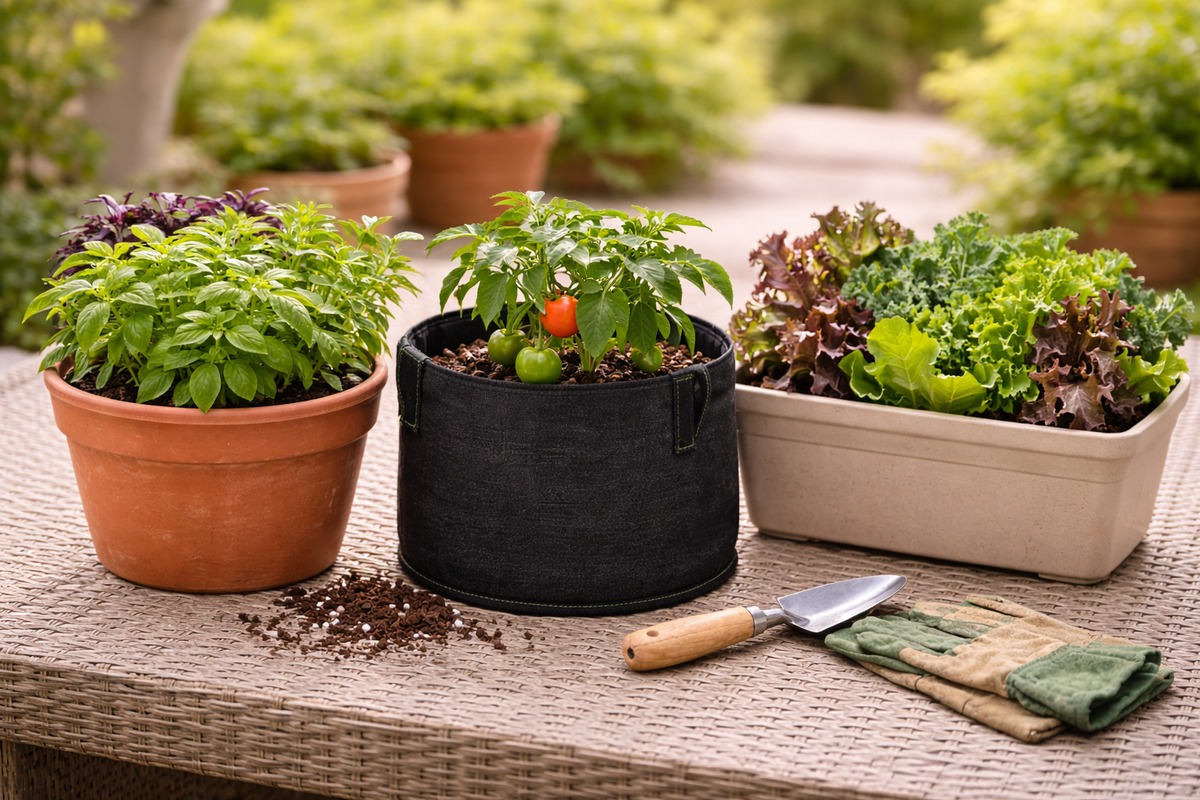
What makes a container “good” for vegetables?
A good vegetable container helps me do three things easily:
- keep roots healthy (air + drainage)
- keep moisture stable (not bone-dry, not swampy)
- support the plant safely (especially tall crops like tomatoes)
When a container fails, it’s usually because:
- it drains poorly
- it overheats in full sun
- it’s too small
- it’s hard to water consistently
So I focus on practical function, not just looks.
The basics I check before buying any container
Drainage holes (non-negotiable)
For outdoor veggies, I want:
- multiple drainage holes
- holes that won’t clog easily
- a design that doesn’t trap water in the base
Size (bigger is easier)
If I’m unsure, I go bigger. Bigger pots mean:
- slower drying
- steadier temperatures
- less nutrient stress
Stability
Tall plants + wind can tip pots. I look for:
- wider bases
- heavier materials for top-heavy plants
- or a way to anchor trellises
Container types: pros, cons, and my best uses
1) Plastic pots (my most practical choice)
Pros
- affordable and lightweight
- hold moisture better than fabric
- easy to move
Cons
- can heat up in full sun (especially dark colors)
- cheap ones can crack or warp
Best for
- herbs
- greens
- peppers
- tomatoes (in large sizes)
My tip: Light-colored plastic stays cooler in heat.
2) Fabric grow bags (awesome roots, faster drying)
Pros
- excellent root airflow
- reduced root circling
- lightweight and easy to store
Cons
- dry out faster (especially wind + hot patios)
- can need daily watering in summer
Best for
- tomatoes (10–20 gallon bags)
- peppers (5–7 gallon bags)
- potatoes (if I want to try them)
- any plant where I want strong roots
My tip: Bigger bags + mulch make grow bags much easier to manage.
3) Terra cotta (pretty but thirsty)
Pros
- classic look
- breathable walls
Cons
- dries out fast
- can crack in freeze/thaw
- heavy when large
Best for
- drought-tolerant herbs (thyme, rosemary)
- decorative pots where I don’t mind more watering
If I want vegetables in terra cotta, I use very large pots and accept extra watering.
4) Glazed ceramic (stable and moisture-friendly)
Pros
- holds moisture better than terra cotta
- heavier (good in wind)
- looks great
Cons
- expensive
- heavy to move (especially big sizes)
Best for
- peppers
- herbs
- greens
- patio “feature” containers
This is a great choice if I don’t need to move pots often.
5) Wood planters / raised patio planters
Pros
- lots of soil volume (stable moisture)
- can grow multiple plants in one container
- comfortable height
Cons
- can be pricey
- needs a liner or good design to avoid rot
- heavy when filled
Best for
- leafy greens “salad planters”
- herbs
- bush beans
- strawberries
- mixed seasonal plantings
6) Self-watering containers (great when designed well)
Pros
- reservoir smooths out watering
- helpful for hot patios and busy weeks
Cons
- can stay too wet in cool weather
- salt buildup can happen
- some designs don’t oxygenate roots well
Best for
- greens
- herbs
- peppers (often)
- tomatoes (only in large, well-designed units)
My tip: I still flush from the top sometimes to prevent salt buildup.
What I’d choose by crop (quick picks)
Tomatoes
Top picks:
- 10–20 gallon fabric grow bag
- 10–15 gallon plastic pot
- large self-watering (if proven design)
Must-have: strong support from day one.
Peppers
Top picks:
- 5–7 gallon plastic pot
- 5–7 gallon grow bag
- glazed ceramic if it stays outside
Greens (lettuce, spinach, arugula)
Top picks:
- wide shallow planters
- railing planters (watch drying)
- self-watering planters
Herbs
Top picks:
- plastic pots (easy)
- glazed ceramic (great “feature” pot)
- long herb planters
Mint: always its own container.
Cucumbers
Top picks:
- 10+ gallon pot with trellis
- large grow bag with trellis
Cucumbers are thirsty, so bigger is always easier.
Heat, wind, and location: matching container to my patio
Hot, sunny patio
- choose bigger containers
- lighter colors
- consider self-watering
- mulch the surface
Windy balcony
- heavier containers or bigger bases
- group pots together
- avoid tall skinny pots for tomatoes
Shady patio
- drainage matters more (soil stays wet longer)
- avoid moisture-control mixes
- water less frequently but deeply
“Nice-looking” containers that quietly fail
These designs often cause trouble:
- pots with one tiny drainage hole
- decorative cachepots with no drainage
- planters with hidden reservoirs that stay wet
- ultra-small trendy pots for big plants
If it can’t drain, it’s not a veggie container (for me).
My quick checklist before planting
Before I fill a container, I check:
- does it have multiple drainage holes?
- is the size realistic for the plant?
- will it overheat in my sun?
- can I support the plant (stake/trellis)?
- can I water it easily where it sits?
This prevents most container garden headaches.
FAQ
Are grow bags better than pots?
Grow bags give excellent root health, but they dry faster. In hot/windy spots, big plastic pots can be easier.
Do I need food-grade containers?
For most gardeners, common outdoor planters are fine. I avoid anything that previously held unknown chemicals.
Should I put gravel in the bottom?
No. I use better potting mix and make sure drainage holes work.
Quick wrap-up
The “best” container depends on my space and watering habits:
- plastic = easiest all-around
- grow bags = best roots, more watering
- glazed ceramic = stable, heavy, pretty
- planters = best for mixed greens/herbs
- self-watering = great when designed well
If I choose the right size with good drainage, my patio garden gets much easier.