
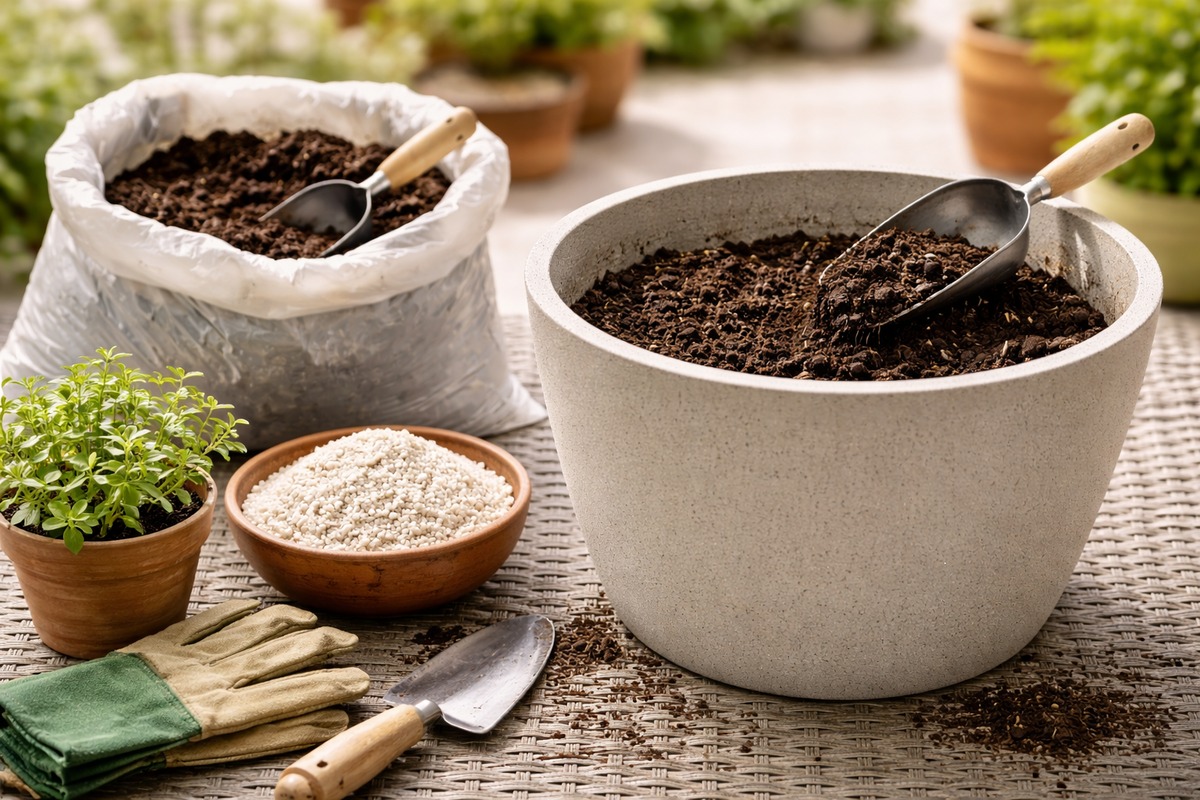
Why container “soil” is different from garden soil
When I garden in pots, the rules change. In the ground, soil has a huge ecosystem and water drains through layers. In a container, everything happens in a small space, and the mix can turn into a wet brick if it’s too heavy.
That’s why I never use:
- garden soil (too dense, compacts, drains poorly)
- “topsoil” bags (inconsistent + heavy)
- random dirt from the yard (pests + poor structure indoors/outdoors)
For containers, I need a potting mix that stays airy and drains well while still holding enough moisture.
The #1 goal: air + drainage (not “richness”)
A good container mix does three things at once:
- Holds moisture evenly (so roots don’t dry out instantly)
- Drains fast (so roots don’t sit in water)
- Stays fluffy (so roots can breathe)
If my mix fails on #2 or #3, I get:
- slow growth
- yellowing leaves
- root rot
- fungus gnats (if constantly wet)
- stunted herbs and sad tomatoes
What to buy: potting mix vs. potting soil (and what labels really mean)
Stores use “potting soil” and “potting mix” interchangeably. I ignore the marketing words and look at the texture.
A good bagged mix usually has:
- peat moss or coco coir (moisture + structure)
- perlite/pumice (air + drainage)
- a wetting agent (helps water soak in)
- sometimes compost or slow-release fertilizer
Red flags I avoid:
- very fine, heavy texture (feels like mud when wet)
- big wood chunks as the main ingredient (can dry unevenly)
- mixes labeled “moisture control” for veggies (often too water-holding in many climates)
Moisture-control can be okay for houseplants or hot/dry patios, but for most vegetable containers, I prefer a mix I can control with watering + drainage.
My simple “no soggy pots” container mix setup
I use one of these two approaches depending on what I’m growing.
Option A: Easy method (works for most containers)
- 90–100% quality potting mix
- optional: add extra perlite if the mix seems dense
This is my go-to for:
- herbs
- greens
- flowers
- most patio pots
Option B: Extra-drain mix (for tomatoes, peppers, bigger containers)
- 80% potting mix
- 20% perlite or pumice (adds air + prevents compaction)
This is my favorite for:
- tomatoes
- peppers
- cucumbers in big pots
- containers that stay wet too long (shady patios, rainy climates)
Quick test: If I water a pot and it stays heavy/wet for days, I add more drainage material next time.
Do I add compost to container mix?
Sometimes, but I don’t rely on compost as the “main plan” for container fertility.
Compost helps:
- improves structure a bit
- adds gentle nutrients
- supports soil life
But too much compost can:
- hold extra water (especially in small pots)
- cause compaction over time
- make fungus gnats more likely if kept wet
My practical rule: I keep compost to 10–20% max in most containers, especially for beginners.
Drainage myths (and what I do instead)
Myth: “Put rocks in the bottom for drainage”
I skip rocks. They don’t improve drainage the way people think—they reduce soil volume and can create weird moisture layers.
What I do instead
- I use pots with real drainage holes
- I use a well-draining mix
- I avoid trays that hold standing water
- I lift pots slightly (pot feet / slats) if they sit on a flat surface outside
That’s the real drainage system.
Fertilizer: the part most people don’t plan for
Container plants can’t “hunt” for nutrients like in-ground plants. The mix starts decent, then nutrients fade fast.
So I choose one simple fertility plan:
Plan 1: Slow-release + water (lowest effort)
- Mix in a slow-release fertilizer at planting time
- Water normally
- Reapply per label schedule
Best for: busy weeks + consistent results.
Plan 2: Liquid feed weekly (most control)
- Use a balanced liquid fertilizer
- Feed lightly every 7–14 days
Best for: tomatoes, peppers, heavy feeders when growth is fast.
My beginner tip: I’d rather feed lightly and regularly than dump a ton at once.
How I water containers so the mix stays healthy
Even the perfect potting mix can fail if watering is off.
My watering checks:
- I lift the pot (weight test): heavy = wait, light = water
- I water deeply until a little drains out
- I don’t let pots sit in a tray of water for hours
- In hot weather, I water early in the day
If I’m watering daily and still seeing wilting, I usually need:
- a bigger pot
- more moisture-holding mix (slightly less perlite)
- shade protection during peak afternoon heat
Container size matters more than I want it to
Small pots dry fast, heat up fast, and run out of nutrients fast.
My rough guide:
- herbs: 1–3 gallons (basil prefers bigger)
- lettuce/greens: 2–5 gallons
- peppers: 3–7 gallons
- tomatoes: 7–15+ gallons (bigger = easier)
- cucumbers: 7–10 gallons with support
If a plant keeps struggling, upgrading pot size fixes more problems than changing fertilizer brands.
Can I reuse potting mix from last season?
Yes—if I refresh it.
How I refresh old mix
- Dump it into a bin and break up clumps
- Remove dead roots
- Add structure back:
- add 20–30% fresh potting mix
- add perlite if it’s compacted
- Add nutrients back:
- compost (small amount) and/or slow-release fertilizer
If the previous plant had disease issues, I’m more cautious and may not reuse for that same crop.
Quick troubleshooting: what my container mix is telling me
Mix stays wet for days
Likely: too dense, pot too small, not enough sun/airflow
Fix:
- add perlite/pumice
- choose a bigger pot
- make sure drainage holes aren’t blocked
Mix dries in hours
Likely: pot too small, too much perlite, full sun + wind
Fix:
- bigger pot
- slightly more coir/peat-based mix
- add mulch on top (even a thin layer helps)
Plant looks hungry but mix seems fine
Likely: nutrient depletion
Fix:
- start consistent feeding (weekly light liquid or slow-release)
FAQ
Is “raised bed soil” okay for containers?
Usually not. Raised bed blends are often heavier than potting mix.
Do I need to sterilize potting mix?
Not for most container gardening. Consistent drainage + airflow matters more.
What about indoor containers?
Indoors I go even lighter on water-holding. Overwatering indoors is easier.
Quick wrap-up
My best container soil setup is simple:
- use a quality potting mix
- add perlite if it stays wet
- skip rocks in the bottom
- pick a fertilizer plan and stick with it
- choose a pot size that matches the plant
That’s how I avoid soggy pots and grow strong roots.