
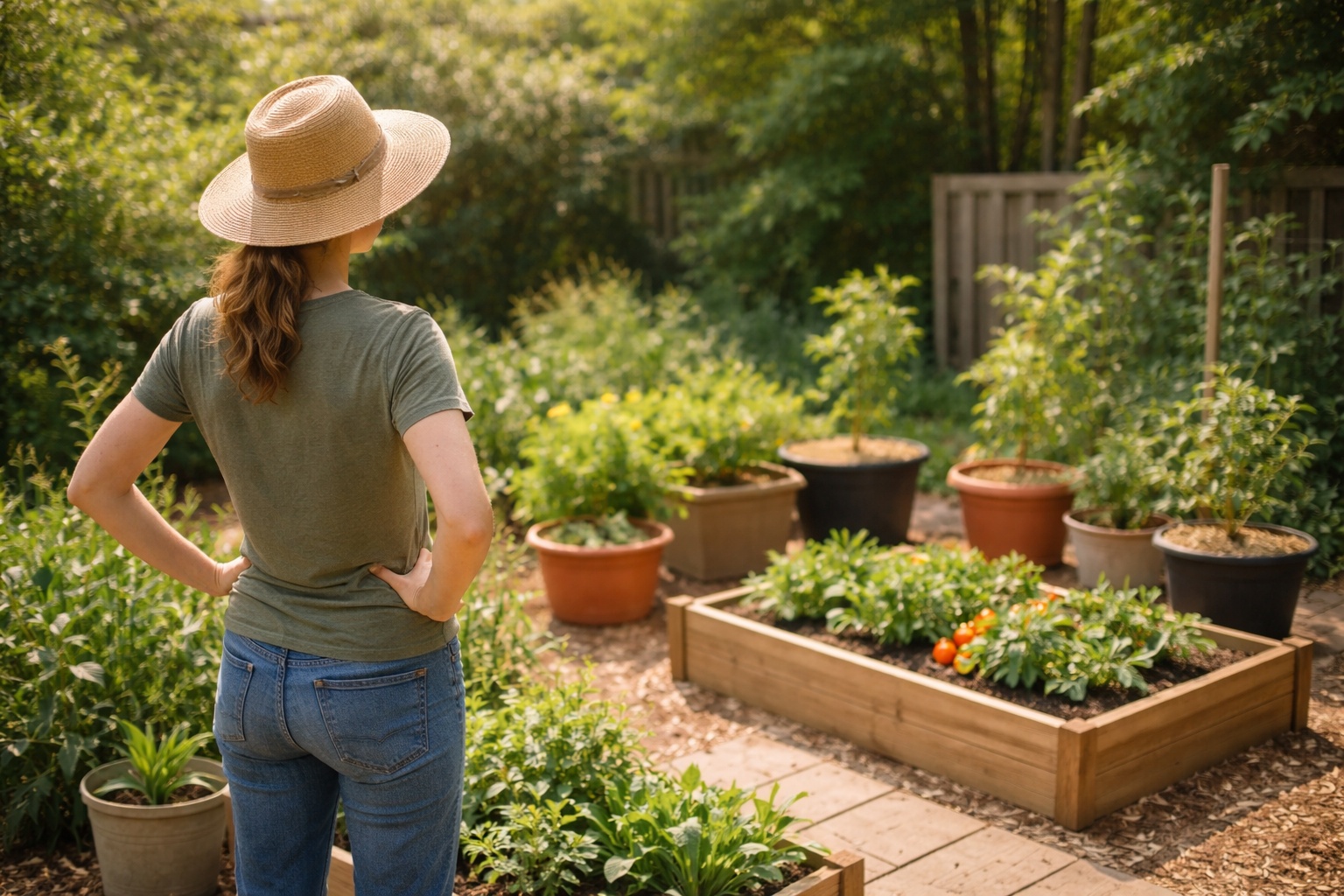
How to Find the Best Spot for Your First Garden
One of the biggest beginner mistakes is focusing only on what to grow and not enough on where to grow it. I can buy good seeds, use decent soil, and follow all the right instructions, but if I choose a bad location, gardening becomes harder than it needs to be.
The best first garden spot is not always the biggest or prettiest space. It is the one that gives me the best chance of success with the least stress. For a beginner, that matters a lot more than trying to create the perfect dream garden on day one.
A simple, well-chosen spot can make watering easier, reduce problems, and help plants grow better from the start.
Why garden location matters so much
Plants do not just need “outside.” They need the right balance of sun, airflow, drainage, and access to water. They also need to be somewhere I will actually pay attention to.
A garden that is technically possible but annoying to reach often gets neglected. A garden that sits in weak sun may never really perform. A garden in a windy or soggy area may struggle even if I do many things right.
That is why choosing the location first is one of the smartest decisions I can make.
Start with sunlight
For most beginner vegetable and flower gardens, sunlight is the first thing I check. Many edible plants and sun-loving flowers do best in a location that gets strong direct light for much of the day.
A beginner does not need to measure every ray perfectly, but it helps to observe the space honestly. Morning sun, afternoon sun, tree shade, fences, and buildings all affect how much light the area really gets.
A spot that looks bright can still end up being too shaded once I pay attention across a full day.
Check the space at different times
This is one of the simplest and most useful things I can do. Instead of guessing, I look at the area in the morning, around midday, and later in the afternoon.
Questions I ask:
- Does the area get direct sun or just bright light?
- Do trees block the sun later in the day?
- Does a fence or house cast a long shadow?
- Is one side of the yard much sunnier than I thought?
Doing this for even one day gives me a much better picture than choosing a spot based on a quick glance.
Do not ignore convenience
Beginners often choose a far corner of the yard because it seems open and empty. Then they realize they have to carry water farther, walk farther, and check the garden less often.
A first garden usually does best when it is somewhere convenient. If I can see it easily or pass by it often, I am more likely to notice dry soil, pests, drooping plants, and ripe harvests.
Convenience does not sound exciting, but it is one of the most underrated parts of gardening success.
Water access matters more than people expect
A garden spot near a hose, spigot, or easy watering setup is much easier to maintain. If I have to drag a long hose through the whole yard or carry watering cans across a large space every time, the garden becomes more work.
This is especially important for:
- containers
- raised beds
- new seedlings
- hot summer gardens
A great sunny spot can still be inconvenient if watering becomes a daily struggle.
Think about wind exposure
A windy garden can dry out faster, stress seedlings, and make containers harder to manage. Some airflow is good, but strong constant wind can make a beginner garden more demanding.
If I have a choice, I prefer a location that gets sun but is not fully exposed to hard gusts all day. A fence, wall, hedge, or other light protection can make the space more forgiving.
Look at drainage after rain
Drainage is one of those things many beginners notice too late. A spot that stays soggy after rain can lead to root stress, slow growth, and more frustration.
If possible, I look at the area after a rain or after watering. Does water sit there? Does the area stay muddy longer than nearby ground? Does it seem compacted?
For containers and raised beds, drainage is easier to control. For in-ground gardens, the natural drainage of the spot matters much more.
Start smaller than you think
A good first garden does not need to take over the yard. In fact, a smaller sunny area near water is usually better than a large awkward space that becomes too much to manage.
I would rather grow a few thriving plants in a good location than spread myself thin in a bigger, less practical spot.
Match the garden type to the location
Some spaces are naturally better for certain styles of gardening.
- Patios and balconies are often best for containers
- Sunny level yard space may be ideal for a raised bed or small in-ground plot
- Areas with poor native soil may be easier with containers or raised beds
- Highly visible spaces near the house are often excellent for a first small garden because I will notice them often
The goal is not to force every space to do every job.
Common beginner mistakes when choosing a garden spot
Picking the biggest space instead of the best one
A larger space is not always easier. It is often more work.
Underestimating shade
Partial shade may be fine for some plants, but many beginner crops grow much better with stronger sun.
Ignoring water access
A hard-to-water garden becomes harder to maintain consistently.
Planting too far from the house
If I do not see the garden often, I may miss important signs.
Choosing a low soggy area
Wet feet are a problem for many plants.
A simple beginner test
If I am torn between locations, I can ask:
- Which spot gets better sun?
- Which one is easier to water?
- Which one will I check most often?
- Which one feels easier to start with right now?
The best first garden spot is often the one that answers those questions most clearly.
Best spots for different beginner goals
If I want herbs and a few vegetables, a sunny patio with containers may be perfect.
If I want a tidy small backyard garden, a raised bed near the house can be ideal.
If I have excellent soil and a sunny open patch, a modest in-ground bed may work well.
The right answer depends less on what looks impressive and more on what will be easiest to keep up with.
Final thoughts
The best spot for a first garden is not just about sunlight. It is about creating a setup that I can realistically maintain. Good light, easy access to water, decent drainage, manageable wind, and everyday convenience all matter.
If I choose the location well, everything that comes after gets easier. And for a beginner, easier usually means more success, more confidence, and a much better chance of sticking with gardening.