
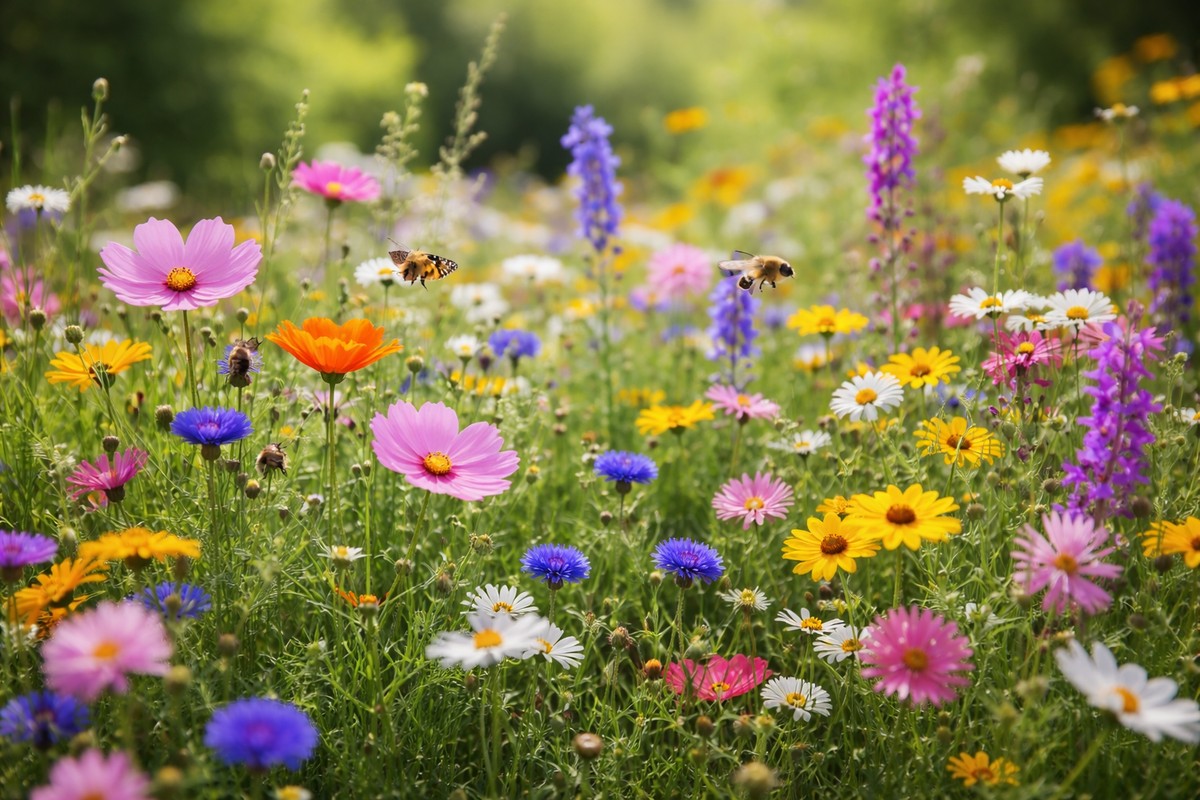
What “pollinator-friendly” really means
Pollinators need:
- nectar and pollen across the season (not just one week)
- sunny, sheltered places to forage
- plants that bloom at different times
The best patch isn’t the fanciest—it’s the one that blooms from spring through fall.
My beginner strategy: choose a mix of bloom times
I aim for:
- early bloomers (spring/early summer)
- mid-season bloomers
- late bloomers (late summer/fall)
This keeps bees and butterflies visiting for months.
Easy wildflower picks (beginner-friendly)
These are popular, reliable choices (best when region-appropriate):
Long bloom + easy care
- Coreopsis (many types)
- Black-eyed Susan (often strong and forgiving)
- Coneflower (great summer blooms)
Great for butterflies and beneficial insects
- Bee balm (loves sun, good for pollinators)
- Milkweed (important host plant for monarchs—choose local types)
- Blazing star / liatris (late-season favorite)
Fillers and meadow-style helpers
- Yarrow (tough once established)
- Aster-type late bloomers (great fall support)
Note: The best results come from choosing natives for my region when possible.
Where I plant for best pollinator activity
- 6+ hours of sun
- some wind shelter (fences/hedges help)
- not too rich soil (too much fertilizer helps weeds)
If the area is shady, I pick shade-tolerant flowers instead of forcing sun lovers.
How I plant (simple version)
- prep so seeds touch soil
- broadcast evenly
- press seed in (don’t bury deep)
- water gently for the first few weeks
- remove aggressive weeds early
Maintenance that keeps the patch improving
Year 1
I focus on:
- watering during establishment
- weed control
- patience (especially for perennials)
Year 2+
I usually do:
- light cleanup at the right time
- leave some seed heads for birds and reseeding
- remove invasive weeds before they spread
How to make blooms last longer
- choose multiple species with different bloom times
- avoid heavy fertilizer
- deadhead some annuals (if I want more blooms)
- leave some seed heads (if I want reseeding)
FAQ
Do I need a wildflower “mix”?
Not required. A planned selection can look more intentional and bloom longer.
Are natives better?
Often yes for local pollinators. If I can, I choose region-appropriate natives.
Will this work in containers?
Yes—many pollinator flowers work in larger pots, but watering is more important.
Quick wrap-up
A great pollinator patch is built on:
- sun
- seed-to-soil contact
- a mix of bloom times
- light maintenance in year one