
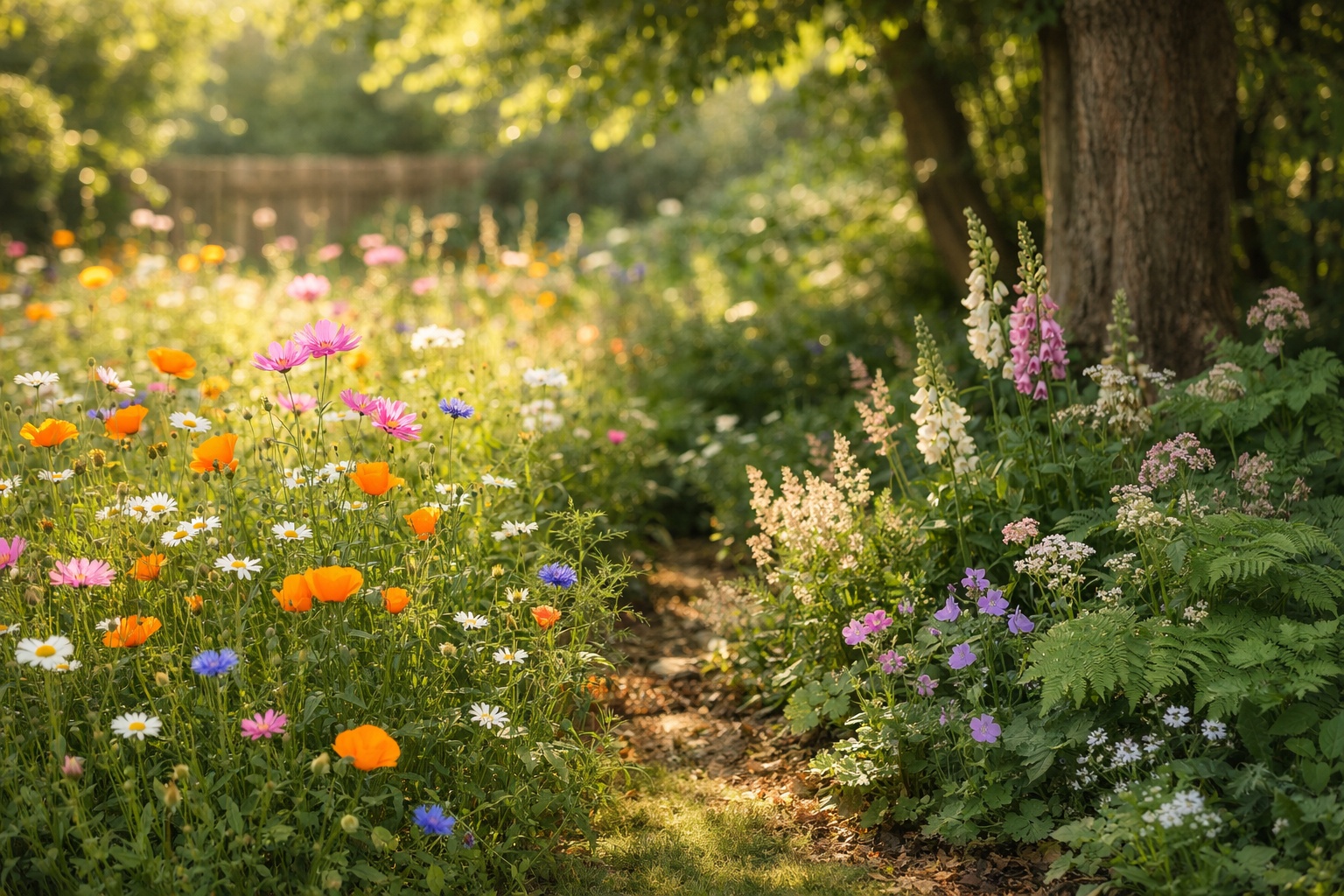
Best Wildflowers for Sun vs Part Shade: What to Plant Where
A lot of beginners assume wildflowers will grow anywhere because they sound natural and low-maintenance. But even easy wildflowers do better when I match them to the light conditions I actually have.
This is where many disappointing wildflower patches begin. The area may not be “bad,” but the seed mix may simply be wrong for that spot. A patch that gets strong sun all day needs different plants than a space that only gets part-day light or light tree shade.
Once I understand the difference, choosing the right wildflowers becomes much easier.
Why light matters so much with wildflowers
Wildflowers are not one single type of plant. A wildflower mix can include many species with different habits and preferences. Some thrive in bright open spaces and bloom best with lots of direct sun. Others tolerate or even prefer lighter conditions.
If I ignore that, I may end up with:
- patchy germination
- weak stems
- fewer blooms
- plants that disappear after early growth
- a mix that never looks as full as I expected
The goal is not just getting seed to sprout. The goal is helping the right plants thrive in the right place.
What “full sun” usually means
For gardening purposes, full sun means the area gets strong direct sun for much of the day. These are often open spaces away from heavy tree shade or tall structures.
Sun-loving wildflowers usually bloom best and stay more robust in these bright conditions.
What “part shade” usually means
Part shade usually means the area gets only part of the day in direct sun, or it gets bright filtered light for a good portion of the day. This may happen near fences, on the edge of tree canopies, or on one side of a building.
A part-shade spot is not the same thing as deep shade. Most wildflowers still want decent light. They just may not want the harshest, brightest all-day exposure.
Wildflowers that usually suit sunny spots
Sunny spots are often the easiest places for classic wildflower-style plantings because many bloom-heavy mixes are built for open bright conditions.
Sun-loving wildflowers are often a good fit when I want:
- strong color
- lots of blooms
- a pollinator-friendly patch
- a meadow feel in an open area
These are often the kinds of places where the patch looks brightest and fullest when things go well.
Wildflowers that are better for part shade
Part-shade wildflowers are useful when the yard is not fully open. Instead of fighting the conditions, I choose species and mixes that can handle that gentler light.
This often works best for:
- woodland-edge style areas
- lighter spaces under open trees
- garden edges with only partial direct sun
- areas that get morning sun but afternoon shade
A beginner usually gets better results by matching the patch to the space instead of trying to force a full-sun wildflower look everywhere.
Why beginners often misjudge their light
One reason this topic matters so much is that beginners often overestimate sunlight. A spot may feel bright and warm, but once I observe it through the whole day, it may not actually get enough direct light for a sun-heavy wildflower mix.
That can lead to frustration because the patch looks thin or underwhelming even when the seed was fine.
How to check the light before sowing
I do not need fancy tools to start. I can simply watch the area across the day and notice:
- when direct sun begins
- when shade moves in
- whether the light is filtered through branches
- whether fences or buildings reduce light more than expected
This simple observation often saves me from choosing the wrong mix.
A better beginner strategy: divide the yard by light
Instead of asking, “What wildflowers are best?” I ask:
- What wildflowers are best for this specific spot?
- Is this area sunny enough for a classic meadow-style mix?
- Would a lighter, more part-shade-friendly planting do better?
Thinking this way makes planning much smarter.
What happens if I plant sun-loving wildflowers in too much shade?
Usually, the patch underperforms. I may still get some growth, but not the strong blooming effect I expected. Plants may stretch, stay sparse, or fade out. That often makes beginners think they failed, when the real issue was the mismatch between seed choice and site conditions.
What happens if I plant shade-tolerant flowers in full blazing sun?
Sometimes they struggle with heat or dry out more quickly than expected, especially in tough exposed areas. Again, the issue is not necessarily my effort. It is the match.
Seed mixes vs choosing individual flowers
Seed mixes are convenient, but they can hide important differences. A mix labeled “wildflowers” may not be ideal for every light condition. That is why it helps to check whether it is intended for sunny meadow conditions or more flexible light.
If I want more control, choosing flowers individually or from a more specific mix can be safer.
Common beginner mistakes
Treating every bright area as full sun
Bright is not always the same as strong direct sunlight for much of the day.
Buying a generic wildflower mix without checking light needs
This is one of the easiest ways to get disappointing results.
Expecting one mix to perform equally well everywhere
Different parts of the yard often need different approaches.
Ignoring trees and seasonal shade changes
A spot may be sunnier in one season and more shaded in another.
A simple beginner rule
If the spot is open and bright most of the day, choose wildflowers for sun.
If the spot gets only part-day direct light or lighter filtered conditions, choose wildflowers that can handle part shade.
If I am unsure, I choose for the lower-light condition rather than overestimating sun.
Final thoughts
Wildflowers are easiest when I match the planting to the light I actually have. That one decision can prevent weak growth, sparse flowering, and a lot of disappointment.
A sunny patch and a part-shade patch are not the same project. Once I stop treating them the same, it becomes much easier to choose the right wildflowers and get a patch that actually looks like it belongs there.