
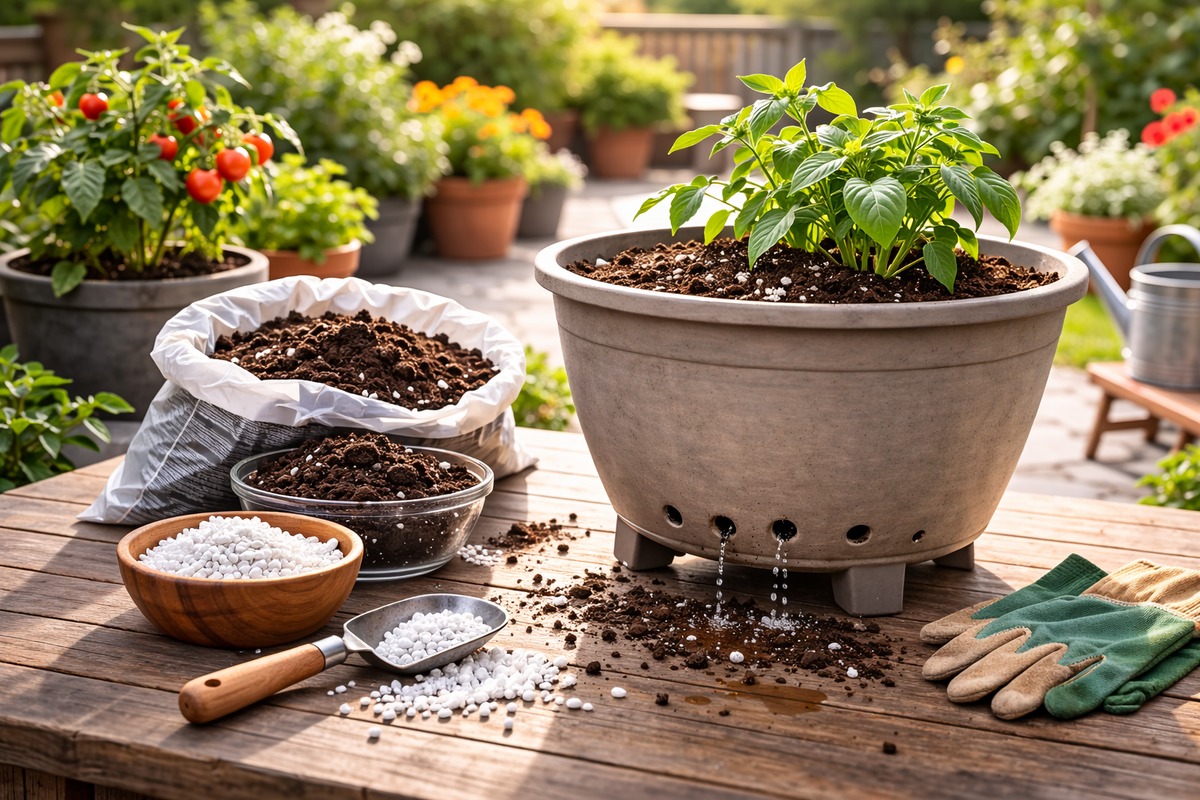
The truth about soggy containers
When a pot stays wet too long, roots can’t breathe. That lack of oxygen can cause:
- slow growth
- yellowing leaves
- fungus gnats and surface mold
- mushy roots and root rot
- wilting even though the soil is wet
And it’s confusing because the plant can look “thirsty,” so I’m tempted to water again—making it worse.
The good news: soggy pots are almost always fixable.
The 6 most common causes of poor container drainage
1) The potting mix is too dense
This is the #1 cause.
Signs:
- water pools on top before soaking in
- the mix feels muddy when wet
- the pot stays heavy for days
Dense mix holds water and compacts over time, squeezing out air.
2) The container doesn’t drain well (or holes are blocked)
Even if my pot has holes, they might be:
- tiny
- clogged with roots or debris
- blocked by a saucer that’s always full
I always check drainage holes first.
3) The pot is too small for the plant
This sounds backwards, but small pots can drain poorly because:
- roots fill the space and create a tight mass
- soil structure collapses faster
- water moves unevenly (wet pockets + dry pockets)
4) The pot sits flat on the ground
If my pot sits flush on:
- a patio slab
- a deck board
- a saucer that never drains
…water can’t leave efficiently. The bottom stays wet, and roots suffer.
5) Too much compost (or “moisture control” mix)
Compost is great, but in containers, too much can:
- hold extra water
- compact after repeated watering
- attract fungus gnats if the top stays wet
Moisture-control mixes can be useful in heat, but they can be too water-holding in cool/shady spots.
6) Shade + cool weather
In spring or shady balconies, evaporation is slower. A mix that’s perfect in July might be soggy in April.
So “soggy pot” isn’t always about my watering—sometimes it’s environment.
First: diagnose the problem (my quick test)
I do this after watering:
- Does water soak in quickly?
- Do I see some drainage within a minute or two?
- Is the pot still heavy 48 hours later?
If it’s still heavy 2 days later in normal weather, I need a drainage fix.
The fix that actually works: improve the mix (not rocks)
Myth: “Put rocks in the bottom”
I skip rocks. They reduce soil volume and don’t fix the mix.
What works instead
I build a mix that drains well but still holds moisture.
My drainage-boost mix
- 80% potting mix
- 20% perlite or pumice
If my mix is very dense, I go up to:
- 30% perlite/pumice
This increases air pockets and keeps structure from collapsing.
Step-by-step: how I fix a soggy container (without starting over)
Step 1) Check the drainage holes
- clear debris
- make sure they’re not blocked by a liner
- confirm there are multiple holes for larger pots
Step 2) Elevate the pot
I lift containers slightly so water can escape:
- pot feet
- small wood slats
- bricks under edges (not blocking holes)
This alone can solve the “sits flat” problem.
Step 3) Adjust watering rhythm
Overwatering is often “too frequent,” not too much at once.
So I:
- water deeply
- then wait until the pot lightens before watering again
Step 4) If still soggy, repot with a better mix
If the container stays soggy after the steps above, I repot:
- loosen root ball gently
- replace some mix with a perlite-boosted blend
- don’t pack the mix down hard
Repotting sounds annoying, but it can save the plant fast.
How to prevent soggy pots from the start
Choose a container with real drainage
For veggies, I prefer:
- multiple holes
- sturdy pots that don’t warp
- sizes that match the plant
Use the right mix
If I’m unsure, I do:
- potting mix + extra perlite
Avoid too much compost
I keep compost around:
- 10–20% max
Add a thin mulch layer
Mulch helps prevent extreme dry-down cycles, but I keep it thin so the top doesn’t stay wet forever.
Special cases
Fabric grow bags
They usually drain great—sometimes too great.
If my grow bag is still soggy, it’s almost always:
- dense mix
- shade/cool weather
- overwatering frequency
Self-watering containers
These can cause sogginess if:
- the wicking system is too aggressive
- the reservoir is always full in cool weather
I treat them differently:
- keep reservoir lower in spring
- flush from the top sometimes
- watch for algae and smell
Signs drainage is improving
- soil surface dries a bit between waterings
- pot weight drops steadily after watering
- leaves perk up and growth resumes
- fewer gnats/mold issues
- roots look whiter and healthier (if I see them)
FAQ
Should I drill extra holes in plastic pots?
If I can do it safely, yes—more holes often help.
Can I “fix” drainage by watering less?
Sometimes, but if the mix is wrong, watering less just means the plant stays stressed longer. Better mix is the real fix.
Is perlite necessary?
Not always, but it’s the easiest drainage booster and helps most dense mixes.
Quick wrap-up
When my containers stay soggy, I don’t blame myself—I troubleshoot:
- mix density
- drainage holes
- pot sitting flat
- compost/moisture-control ingredients
- shade/cool weather
And the fix that works most often is simple:
potting mix + extra perlite + elevation.