
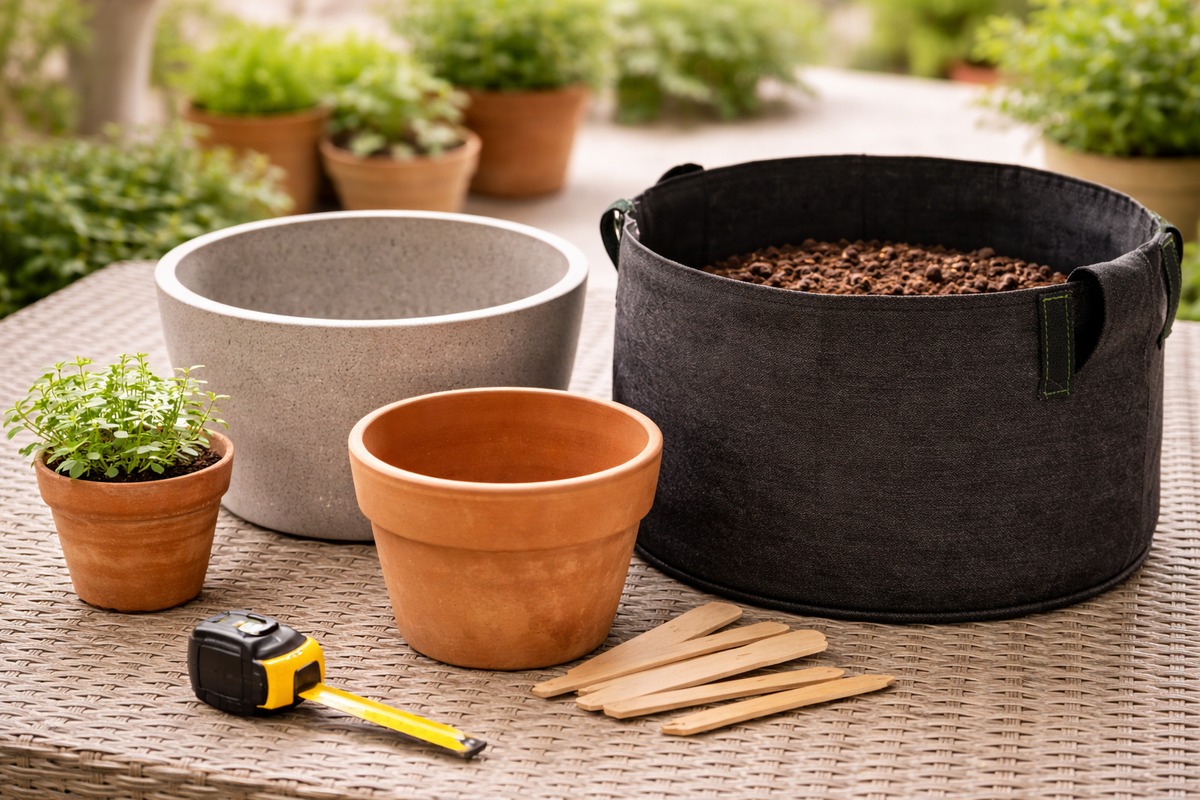
Why container size matters more than fertilizer
When a plant struggles in a container, most people blame fertilizer first. But in my experience, container size causes more problems than anything else.
A pot that’s too small means:
- roots hit the walls quickly and stall
- soil heats up faster (roots hate that)
- water evaporates faster (especially in sun + wind)
- nutrients wash out quickly
The result is the classic container gardening cycle: constant watering, yellow leaves, slow growth, and plants that never look “happy.”
If I size the container right, everything gets easier: watering, feeding, and growth.
How I choose the right pot (3 simple decisions)
1) What’s the plant’s root style?
- Shallow roots: lettuce, spinach, many herbs
- Medium roots: peppers, bush beans
- Deep/strong roots: tomatoes, cucumbers, squash (especially if trained up), carrots (if grown in containers)
2) How long will it live in the pot?
- quick greens = smaller pots can work
- full-season tomatoes = need big containers for steady growth
3) What’s my climate like?
- hot/windy patio = go bigger (water retention matters)
- cooler/shady balcony = drainage matters more, but bigger still helps
The container size chart I use (simple + practical)
Below are starting points that work well for most patios and balconies. Bigger is usually easier.
Herbs
- Basil: 2–5 gallons (bigger = better basil)
- Parsley: 1–3 gallons
- Cilantro: 1–3 gallons (bolts fast, but likes consistent moisture)
- Mint: 2–5 gallons (I keep it contained!)
- Thyme/Oregano/Rosemary: 2–5 gallons (perennial-style herbs like space)
Tip: If I want a “mixed herb pot,” I treat it like a bigger plant and use 5+ gallons so they don’t fight for water.
Leafy greens
- Lettuce: 2–5 gallons (or wide shallow bowls)
- Spinach: 2–5 gallons
- Arugula: 1–3 gallons
- Kale: 3–7 gallons per plant (kale gets big)
Greens can grow in smaller containers, but they dry out fast. Wide containers are often better than deep narrow ones.
Tomatoes
- Cherry tomatoes: 7–10 gallons (10 is easier)
- Slicer tomatoes: 10–15+ gallons
- Determinate tomatoes: 7–10 gallons
- Indeterminate tomatoes: 10–20 gallons (bigger = more forgiving)
If I’m serious about tomatoes, I choose bigger and add a strong support from day one.
Peppers
- Bell peppers: 5–7 gallons
- Hot peppers: 3–5 gallons
- Multiple pepper plants in one pot: I don’t do it unless the pot is huge (they compete fast)
Peppers are slower early on, so a slightly bigger pot keeps moisture stable and helps them push through hot spells.
Cucumbers
- Bush cucumbers: 7–10 gallons
- Vining cucumbers (trellised): 10+ gallons
Cucumbers are thirsty. A bigger pot prevents daily panic watering.
Beans
- Bush beans: 3–5 gallons (or long planters)
- Pole beans: 7–10 gallons with a trellis
Beans don’t love cramped roots if I want high production.
Zucchini + squash (container-friendly varieties)
- Patio zucchini: 10–15 gallons
- Winter squash: usually not ideal in containers unless I have very large pots (15–20+ gallons)
Squash plants are huge feeders and drinkers. Small pots equal constant stress.
Strawberries
- Strawberry pots / hanging planters: works, but dries fast
- For easier care: wide 3–7 gallon containers with good drainage
Root crops in containers
Root crops are possible, but depth matters.
- Radishes: 6–8 inches deep
- Carrots: 10–14+ inches deep (short varieties are easiest)
- Beets: 10–12 inches deep
- Green onions: 6–8 inches deep
For roots, I prioritize depth more than gallon size.
Pot depth vs. pot width (what I’ve learned)
- Wide pots: better for greens and herbs (more surface area, easy planting)
- Deep pots: better for tomatoes, peppers, roots (more root runway)
The best “all-purpose” container shape is usually:
- medium-wide
- at least 10–12 inches deep
- with strong drainage holes
Fabric pots vs. plastic vs. ceramic
Fabric grow bags
Pros:
- great airflow to roots
- reduce root circling
Cons: - dry out faster in heat/wind
Plastic pots
Pros:
- hold moisture better
- lightweight and cheap
Cons: - can heat up in full sun
Ceramic/terra cotta
Pros:
- looks great, stable
Cons: - terra cotta dries fast; ceramic can be heavy
My rule: In hot weather, bigger containers matter even more, especially for fabric pots.
How I avoid “mystery wilting” in containers
Sometimes plants wilt even when soil is wet. That can happen when:
- roots are damaged or rotting
- the pot is overheating
- the plant is outgrowing the container
My quick checks:
- Lift the pot: too light = thirsty
- Check drainage: does water drain out fast?
- Feel the pot: is it hot in sun?
- Look at growth speed: is the plant huge for the pot?
If I suspect it’s root-bound, I up-pot sooner rather than later.
When I should pot up (move to a bigger container)
I pot up when:
- roots circle the bottom
- the plant drinks water extremely fast
- growth slows even with feeding
- the plant wilts in mild heat
Potting up early is easier than “rescuing” a stressed plant later.
FAQ
Can I grow tomatoes in a 5-gallon bucket?
Sometimes, yes (especially determinate or smaller varieties), but it’s less forgiving. If I can, I choose 10 gallons.
Do bigger pots always mean better?
Mostly, yes—until the pot is so big that moving it is impossible. Bigger pots stabilize moisture and temperature.
What if I only have small containers?
I choose crops that like small containers:
- herbs
- lettuce
- arugula
- radishes
- green onions
Quick wrap-up
If I’m unsure, I go one size bigger.
Bigger containers mean:
- steadier moisture
- cooler roots
- fewer nutrient problems
- less daily stress
That’s the fastest way to make container gardening feel easy.