
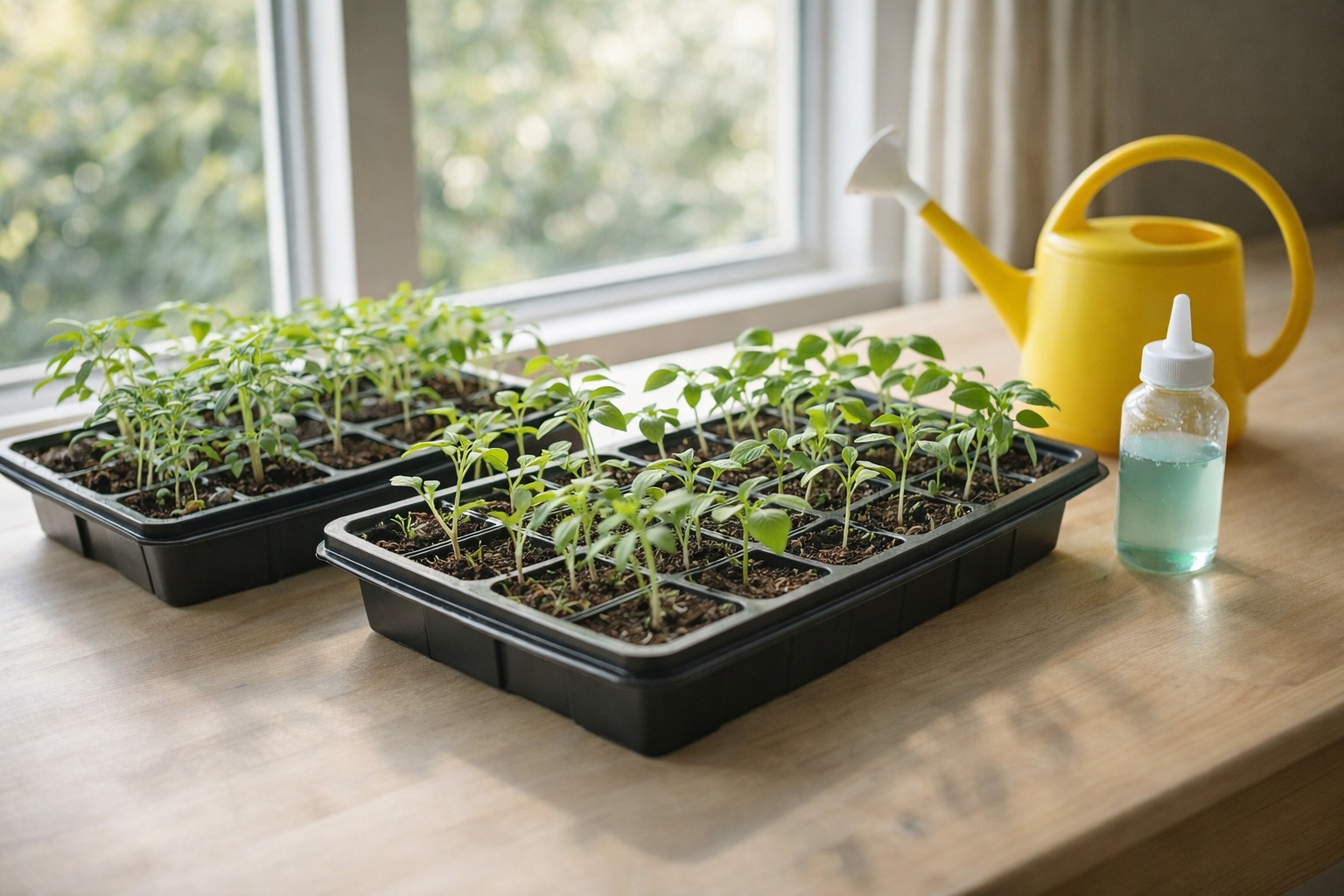
Do Seedlings Need Fertilizer? When to Start Feeding and What to Use
Fertilizing seedlings confuses a lot of beginners because the advice often sounds extreme in both directions. One person says seedlings do not need any fertilizer at all. Another says to start feeding immediately. Then someone else says fertilizer will burn them if I even think about it too soon.
The truth is simpler than that.
Seedlings do not need fertilizer on day one, but once they begin growing beyond their earliest stage, they usually benefit from gentle feeding. The trick is timing and moderation. Too early or too strong can cause problems. Too late can leave seedlings pale, slow, or stalled.
Once I understand that balance, feeding seedlings becomes much easier.
Why seedlings do not need fertilizer right away
When a seed first germinates, it uses the energy stored inside the seed. That is what gets the first growth started. At this stage, the seedling is tiny and does not need much from me beyond moisture, light, and the right temperature.
This is why I do not rush to fertilize immediately after germination. The plant is still living off its own reserves and establishing itself.
When seedlings start needing more nutrition
As the seedling grows, it eventually uses up that early stored energy. Once true leaves begin developing and the plant continues active growth, it often benefits from a gentle source of nutrients.
This is especially true when seedlings are growing in seed-starting mix. Seed-starting mix is excellent for germination and root health, but it is often light on nutrients. That is great at first, but it means I cannot expect it to feed seedlings indefinitely.
A simple rule: wait for true leaves
For most seedlings, I wait until true leaves are present before thinking about fertilizer. The first little leaves are seed leaves. The next set, which looks more like the real plant, are the true leaves.
That stage is usually a good sign that the seedling is moving beyond germination and into real growth.
I do not need to fertilize the second I see them, but that is the point when feeding starts to make sense.
Signs seedlings may need feeding
Not every tray looks exactly the same, but common signs include:
- pale green color
- slow growth even with good light
- seedlings that seem to stall
- plants staying small even though conditions are otherwise decent
- older seedlings that have been in the same mix for a while
I still check light and watering first, because weak light causes many of the same symptoms. But once those basics are in order, nutrition may be the missing piece.
What kind of fertilizer is best for seedlings?
For beginners, the safest approach is a gentle fertilizer that can be diluted and used lightly. I do not want a harsh, heavy feeding program for tiny plants.
The goal is steady support, not fast forced growth.
A balanced fertilizer at low strength is usually the easiest path. Some gardeners prefer liquid feeding because it is easy to dilute and control. Others use a potting mix with some nutrition once seedlings are potted up.
What matters most is that I keep it mild.
Why strong fertilizer is a mistake
Beginners sometimes assume more fertilizer means faster, better seedlings. Usually it just means more risk.
Overfeeding can lead to:
- burned roots
- weak, overly soft growth
- stress
- salt buildup
- seedlings that look worse instead of better
Tiny seedlings do not need a heavy hand. They need consistency.
How often should I feed seedlings?
There is no single perfect schedule for every crop and setup, but a light, repeatable routine works better than occasional heavy feeding.
A small, regular feeding approach is usually easier for beginners to manage than strong doses spaced far apart. The main thing is to avoid swinging between starving the seedlings and flooding them with nutrients.
Fertilizer and potting up
When I pot seedlings up into a larger container with fresh potting mix, that new mix may already provide some nutrition. In that case, I may need less added feeding for a while.
This is one reason seedling care changes over time. A plant in a tiny starter cell behaves differently from a plant that has already been moved into a larger pot.
Common seedling feeding mistakes
Feeding too early
If the seedling has barely emerged, it does not need fertilizer yet.
Feeding too strong
This is one of the easiest ways to stress young plants.
Trying to fix poor light with fertilizer
If seedlings are weak because the light is poor, feeding them more will not solve the root problem.
Ignoring the growing medium
Fresh potting mix and old exhausted seed-starting mix behave differently.
Forgetting that bigger seedlings need more support than tiny ones
Nutritional needs change as seedlings mature.
A simple beginner feeding routine
If I wanted the least confusing system possible, I would do this:
Wait until the seedlings have true leaves and are actively growing. Start with a very gentle fertilizer solution. Watch how the plants respond. Keep the feeding light and steady rather than strong. If I pot seedlings up into fresh mix, I adjust and do not assume they need the same routine forever.
That is enough for most beginner setups.
Which seedlings tend to need feeding more?
Longer-growing indoor seedlings often benefit the most. If I am keeping seedlings indoors for a while before transplanting, nutrition becomes more important than it is for very fast crops that move outdoors quickly.
This is why tomatoes, peppers, flowers, and other longer-held seedlings often show the need for feeding more clearly.
What healthy seedlings should look like
When feeding is going well, I usually see:
- steady new growth
- decent green color
- sturdy development
- no obvious burning or stress
- seedlings that continue progressing instead of stalling
The goal is not deep dark color at all costs. The goal is balanced growth.
Final thoughts
Yes, seedlings usually do need fertilizer eventually, but not immediately. Good timing matters more than complicated products. Once seedlings move beyond their earliest stage and begin active growth, gentle feeding helps support strong, steady development.
For beginners, the simplest rule is this: wait until true leaves, start gently, and do not overdo it. That approach prevents most of the common problems and keeps seedlings growing without unnecessary stress.