
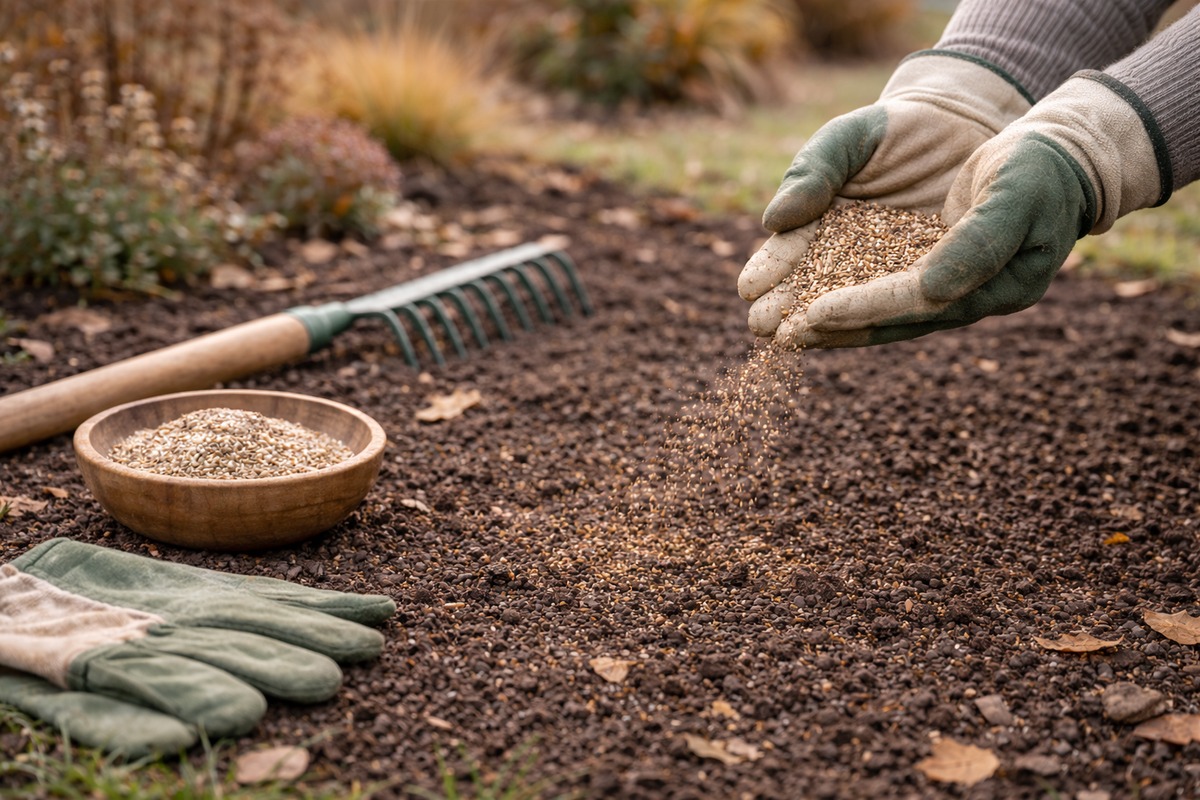
Why fall sowing is the “easy mode” for many wildflowers
A lot of perennial wildflower seeds have built-in dormancy. In nature, seeds drop in late summer/fall, sit through winter cold and moisture, then sprout in spring.
Fall sowing copies that cycle—so I get:
- better germination for many perennials
- less indoor work
- seedlings that sprout at the right time in spring
- stronger early root development (in many cases)
It’s not perfect for every plant, but for a beginner-friendly pollinator patch, it’s one of the easiest methods.
Which wildflowers benefit most from fall sowing?
Fall sowing is especially helpful for many perennials and native species that prefer (or require) cold stratification.
Signs fall sowing is a good idea
- the seed packet mentions “cold stratification”
- it says “sow in fall”
- it says “needs a cold period” or “pre-chill”
- it’s a perennial wildflower and germination is slow/erratic in warm conditions
Even if the packet doesn’t say it, fall sowing often improves the odds for many perennials.
When I should NOT fall sow
Fall sowing isn’t always the best choice if:
- I’m planting mostly annuals and want reliable spring timing
- my area has intense erosion/washed-out slopes (I can still do it, but I need better stabilization)
- I can’t control weeds at all (weeds can still win in spring)
Also: if winters are extremely mild, some seeds won’t get enough cold. In that case, spring sowing or fridge stratification may work better.
The best timing: when to sow in fall
I aim to sow after the weather cools so seed doesn’t sprout immediately and die in winter.
My simple fall sowing timing rule
- Sow when nights are consistently cool and the ground is starting to chill
- I want seeds to sit dormant, not germinate in fall
In many places, that means:
- late fall into early winter
- after the first hard frosts
- before heavy snow (or right after a light snow if I’m broadcasting)
I don’t need the exact perfect date. I just want “cool enough that germination waits for spring.”
Site prep matters more in fall sowing
If I toss seed onto grass, winter won’t magically fix it. Seeds still need soil contact.
My fall prep checklist
- remove or smother grass/weeds
- rake soil lightly
- remove thick thatch
- level the surface (no deep ruts where seed washes)
Goal: I want seed touching soil, not sitting on a blanket of dead grass.
How I sow wildflower seeds in fall (my method)
Step 1) Mix seed with sand (optional but helps)
Wildflower seed is tiny. Mixing it with dry sand helps me spread it evenly.
Step 2) Broadcast in two passes
I scatter half of the mix one direction, then the other half crosswise. This prevents “clumps” of one species.
Step 3) Press seed into soil
This step matters:
- I gently walk over the area or press with a board
- I want good seed-to-soil contact
Step 4) Don’t bury it deep
Most wildflower seed should be shallow. If I bury it deep, spring germination drops.
If I’m worried about washout, I do a very light dusting of fine soil or compost—not thick coverage.
How I prevent seed from washing away
Fall sowing happens during rain, freeze/thaw, and sometimes snow melt. So I use a few simple safeguards.
What helps on flat ground
- press seed firmly into soil
- lightly rake (very shallow)
- avoid smooth “hard pan” surfaces where water runs fast
What helps on slopes
- sow into roughened soil (tiny grooves catch seed)
- add a super light layer of straw (not hay) to slow water
- avoid thick mulch that smothers tiny seeds
Key: A little straw to reduce splash and runoff can help. A thick mulch blanket can block germination.
What I do in spring after fall sowing
Spring is when I can ruin things by “helping” too much.
My spring plan
- don’t disturb the soil surface
- water gently if spring is dry
- start weed control early (before weeds seed)
- don’t fertilize (it usually boosts weeds)
I treat the area like a nursery bed: gentle moisture and minimal disturbance.
Weed control for fall-sown wildflowers
Weeds will germinate too—often faster than wildflower seedlings.
My simple weed strategy
- I learn what my seedlings look like (even roughly)
- I pull obvious aggressive weeds early
- I focus on weeds that grow tall fast and shade everything
- I remove weeds before they flower and set seed
I don’t need a perfect weed-free meadow. I just need wildflowers to get enough light early on.
What to expect (realistic results)
First spring
- germination may be staggered (normal)
- perennials may look like “just leaves” at first
- blooms may be light or late in year one
Year two
This is usually when the patch gets exciting:
- fuller plants
- more blooms
- better pollinator activity
- stronger competition against weeds
FAQ
Do I need to cover wildflower seed in fall?
Usually no—pressing seed into soil is enough. If erosion is a concern, I use a very light dusting or a thin straw sprinkle.
What if birds eat the seed?
Pressing seed in helps. Sowing right before a cold spell or light snow can also reduce bird interest.
Can I fall sow a wildflower mix?
Yes—just make sure it’s appropriate for my region and includes perennials that benefit from cold.
Quick wrap-up
Fall sowing works because winter does the “stratification” for me.
My success formula is:
- sow late enough that seeds stay dormant
- prep so seed touches soil
- press seed in (don’t bury deep)
- prevent washout on slopes
- manage weeds early in spring
That’s it—and it makes perennial wildflowers much easier.