
Why wildflowers feel “easy”… until they don’t
I love wildflowers because they can turn a boring patch into color and pollinator activity fast. But wildflowers fail for a few predictable reasons:
- I sow at the wrong time (especially for perennials)
- I scatter seed onto weedy grass without prep
- I bury seed too deep
- weeds outcompete seedlings in the first month
Once I avoid those mistakes, wildflowers become one of the most rewarding things I can grow from seed.
Step 1: Decide what kind of wildflowers I’m planting
Before I buy or sow anything, I decide which group I’m working with:
Annual wildflowers (fast results)
These bloom the same season. Great if I want color quickly.
Examples: poppies (in some climates), cosmos, zinnias (often called “wildflower-style”), calendula, cornflower.
My expectation: blooms in ~6–12 weeks depending on weather.
Perennial wildflowers (long game)
These often focus on roots in year one and bloom later.
Examples: coneflower, black-eyed Susan, milkweed, coreopsis (varies), yarrow (varies).
My expectation: light blooms year 1 sometimes, better in year 2.
“Native” wildflowers (best for local pollinators)
Native plants support local bees, butterflies, and birds better than many non-natives. If my goal is pollinators and low-maintenance, I lean native whenever possible.
Step 2: Pick the best sowing time (fall vs spring)
Timing is the cheat code.
Fall sowing (often easiest for perennials)
Many perennial wildflower seeds naturally sprout after experiencing cold and moisture. Fall sowing mimics nature and can improve germination.
I choose fall sowing when:
- I’m planting mostly perennials
- I want less indoor work
- I’m okay with waiting for spring germination
Spring sowing (best for annuals + quick color)
Annuals usually don’t need long cold exposure. Spring sowing works well when soil is warming.
I choose spring sowing when:
- I want blooms this summer
- I’m planting mostly annuals
- I can keep weeds controlled early on
Simple rule I use:
- Perennials often prefer fall sowing (or cold stratification)
- Annuals often prefer spring sowing
Step 3: Choose the right location (this matters more than fertilizer)
Most wildflowers want sun.
My easy location checklist
- 6+ hours of sun is ideal for most mixes
- Good drainage (wildflowers hate swampy soil)
- A spot where I can manage weeds early
If I only have part sun, I choose shade-tolerant wildflowers instead of forcing sun lovers to struggle.
Step 4: Prep the area so seeds can actually touch soil
Wildflower seeds need soil contact. If I toss seed onto thick grass, most of it never reaches soil.
Option A: Best prep (for lawns/grass)
- I remove existing grass/weeds (shallow scrape or smothering method)
- I loosen the top 1–2 inches (light raking is enough)
- I level and remove clumps so the surface is even
Option B: “Lazy but works” prep (for thin/weedy areas)
If the area isn’t thick grass, I can:
- mow very low
- rake aggressively
- remove loose thatch
- expose patches of soil
Goal: I want at least 50% visible soil before sowing.
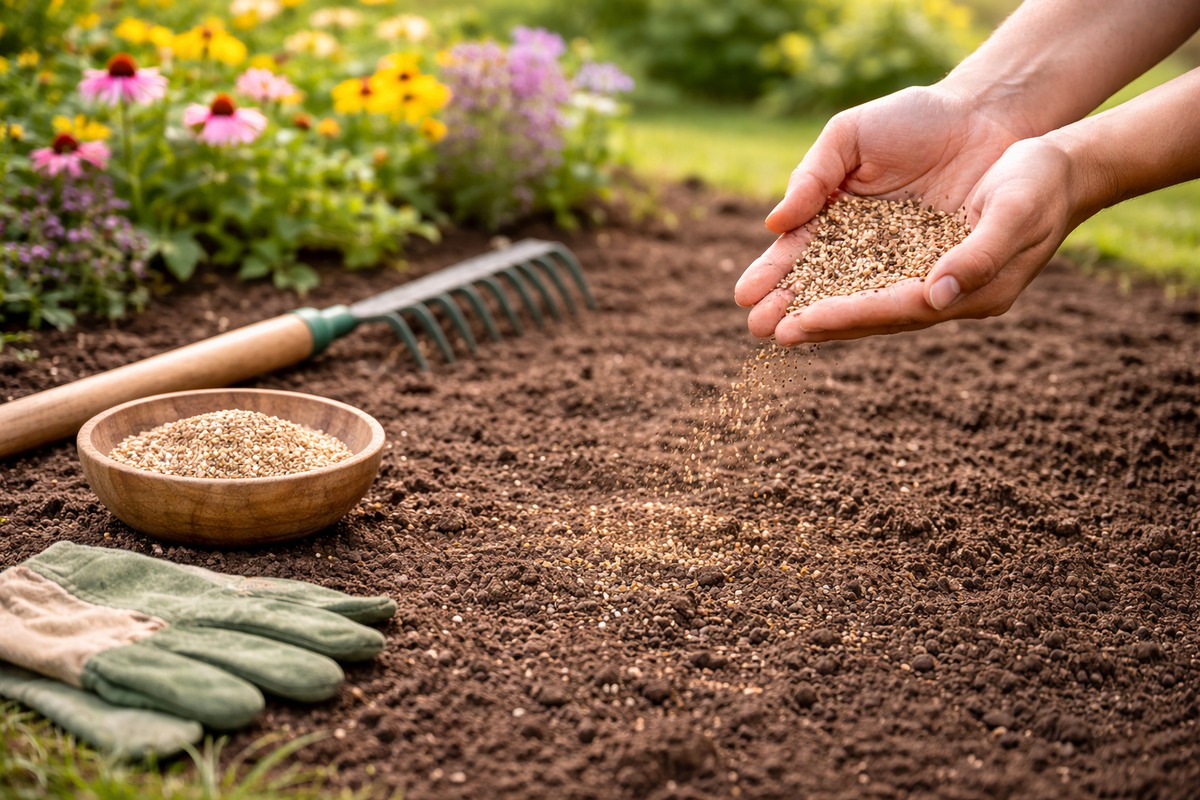
Step 5: How I sow wildflower seed (without burying it)
Most wildflower seeds should be sown very shallow.
My sowing method
- I mix seed with dry sand (optional but helpful for even coverage)
- I broadcast evenly in two directions (north-south, then east-west)
- I press seed into soil (walk on it lightly or use a board/roller)
- I do not cover deeply—at most a dusting of fine soil for very dry areas
Rule I follow: if I can’t see any seed after sowing, I probably buried it too deep.
Step 6: Watering the first month (the make-or-break window)
The first 3–4 weeks are when tiny seedlings get outcompeted or dry out.
What I do after sowing
- I keep the surface lightly moist until germination starts
- Once seedlings appear, I water less often but deeper
- If it rains regularly, I back off
I don’t aim for soggy soil—just consistent moisture while roots establish.
Step 7: Weed control (how I stop the “weeds won” problem)
Weeds are the #1 reason wildflower patches look disappointing in year one.
My weed strategy
- I hand-pull big weeds early (especially before they seed)
- I don’t panic about a few weeds—just prevent takeover
- I avoid disturbing soil too much (disturbance brings up more weed seeds)
If I planted perennials, I remind myself: year one is establishment, not perfection.
What about wildflower “mixes”?
Mixes can be great, but they’re not all equal.
What I look for in a mix
- clearly listed species (not just “wildflower mix”)
- includes region-appropriate plants when possible
- a balance of bloom times (early/mid/late season)
If a mix doesn’t tell me what’s inside, I treat it like a surprise. Sometimes that’s fine—sometimes it’s messy.
What to expect in year one (realistic timeline)
If I sow annuals
- seedlings in 1–3 weeks (often)
- blooms in 6–12 weeks
- peak bloom mid-to-late summer
If I sow perennials
- seedlings may be slower
- lots of leafy growth first
- stronger blooms in year two
This expectation keeps me from thinking I “failed” when I actually just planted perennials.
FAQ
Do I need fertilizer for wildflowers?
Usually no. Too much fertilizer can create tall, floppy growth and favor weeds. I focus on sun + soil contact + weed control.
Can I grow wildflowers in containers?
Yes, especially smaller “meadow” style planters or cut-flower style annuals. I just use the same rule: good soil contact, shallow sowing, and steady moisture.
Should I mow a wildflower patch?
Sometimes. For established patches, mowing once a year (timed correctly) can reduce weeds and reset growth. In year one, I’m more gentle and focus on weed removal.
Quick wrap-up
My wildflower success comes from:
- choosing annuals vs perennials on purpose
- sowing at the right time (fall for many perennials)
- prepping so seed touches soil
- keeping moisture steady early
- controlling weeds before they take over
That’s how I get real blooms instead of a weedy mess.