
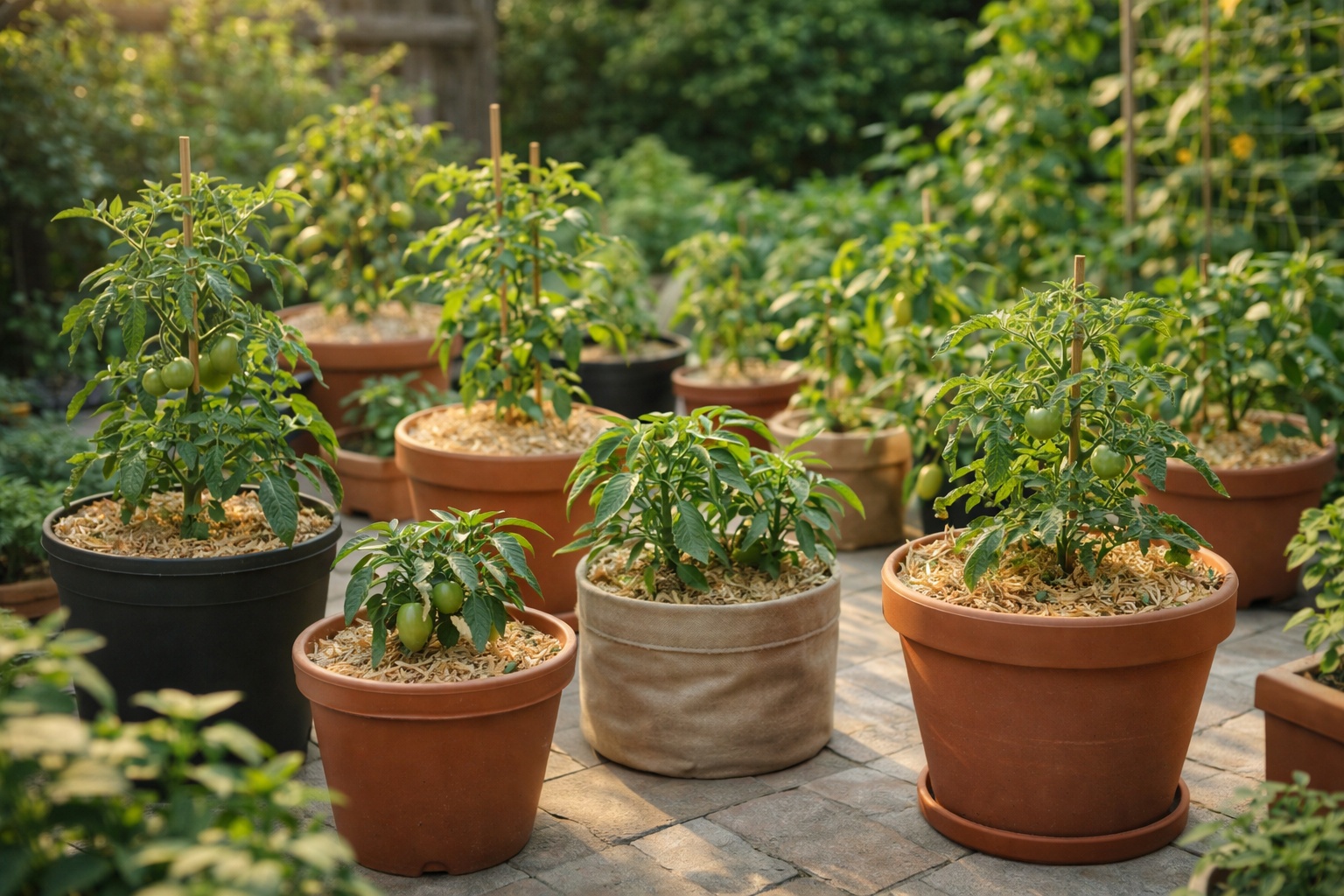
How to Mulch Container Plants to Keep Pots from Drying Out Too Fast
Container plants can look perfectly fine in the morning and surprisingly stressed by afternoon, especially in heat, wind, or full sun. That is one reason beginners often feel like container gardening turns into nonstop watering.
A simple layer of mulch can help more than many people expect.
Most beginners think of mulch as something for flower beds and vegetable rows, not pots. But containers can benefit from mulch too. It helps slow moisture loss, keeps the soil surface from heating up as fast, and can make watering a little more forgiving.
The key is using the right kind and not overdoing it.
Why mulch helps in containers
A container is more exposed than in-ground soil. The sides warm up quickly, the top layer dries fast, and wind moves moisture out of the pot more aggressively.
Mulch helps by covering the soil surface. That surface cover can:
- reduce evaporation
- help soil stay cooler
- soften temperature swings
- reduce crusting on the soil surface
- make watering a little more efficient
It does not replace watering, but it can slow how quickly a pot dries out.
Why this matters so much for beginners
One of the hardest parts of container gardening is consistency. If a pot dries too fast, a beginner may accidentally let the plant swing between drought stress and heavy watering. That is hard on roots and frustrating to manage.
Mulch does not make a container low-maintenance, but it can make it less extreme.
What kinds of mulch work well in pots
For containers, I usually want a light, tidy mulch rather than a heavy deep layer. Good options often include:
- fine bark
- small wood chips
- straw in a light layer
- shredded leaves that are not packed too tightly
- decorative mulch that is safe for edible or ornamental container use
The best mulch for a pot is usually one that covers the surface lightly while still allowing water to move through.
What to avoid
Some mulches are less useful in containers if they mat down, repel water, or stay too soggy right at the base of the plant.
I also avoid piling mulch directly against stems. That can hold too much moisture where I do not want it.
How much mulch to use in a pot
A beginner does not need a thick blanket of mulch in a container. Usually a modest surface layer is enough.
Too much mulch can make it harder to judge soil moisture and may keep the top too wet in cooler conditions. The goal is balance: enough to help, not enough to smother the surface.
Which container plants benefit most?
Mulch can help almost any container plant, but it is especially useful for:
- tomatoes
- peppers
- cucumbers
- large patio vegetables
- herbs in hot sunny pots
- mixed containers exposed to wind
- plants in dark pots that heat up quickly
These are the kinds of containers that often lose moisture fast and benefit from a little extra protection at the surface.
Mulch and hot weather
This is when mulch becomes especially helpful. In hot weather, the soil surface in a container can heat up quickly. That heat increases moisture loss and can stress roots indirectly.
A light mulch layer acts like a buffer. It does not stop summer stress, but it helps reduce the speed of drying.
Mulch and watering
Mulch can change how the top of the pot looks. The surface may not look as obviously dry because the mulch is covering it. That means I need to check moisture a little more thoughtfully instead of judging only by appearance.
I still water based on the actual condition of the pot, not just because mulch is present.
Does mulch cause soggy soil?
Not by itself, if the container already has good drainage and the mulch is used lightly. The real causes of soggy pots are usually poor drainage, a bad potting mix, too much watering, or a container without enough holes.
Mulch can slightly slow surface drying, but it should not turn a healthy pot into a swamp if the rest of the setup is correct.
Common beginner mistakes
Using too much mulch
A thin helpful layer is better than a thick pile.
Pushing mulch against the stem
I leave a little breathing room around the base of the plant.
Thinking mulch replaces watering
It helps, but containers still need regular checking.
Using mulch to fix poor drainage
Mulch is not a solution for a soggy potting mix problem.
Forgetting that small pots still dry fast
Mulch can help, but very small containers may still need frequent watering in heat.
Best situations for mulching pots
I especially like mulching containers when:
- summer heat is increasing
- wind is drying pots quickly
- I am growing larger vegetables in full sun
- the patio gets intense afternoon heat
- I want a little more moisture stability
For a beginner, this can be one of the easiest upgrades to try.
A simple beginner routine
If I wanted a practical low-stress system, I would set up the container with good potting mix, make sure drainage is working well, water deeply when needed, and add a light mulch layer on top once the plant is established.
That one small step often makes container care feel more manageable.
Final thoughts
Mulch is one of the simplest ways to make container gardening a little more forgiving. It helps reduce evaporation, keeps the soil surface more stable, and can soften the stress of heat and wind.
It is not a miracle fix, but it is a smart tool. Used lightly and thoughtfully, mulch can help container plants stay happier and help me spend less time fighting constant dry-out problems.