
How to Keep Weeds Out of a Wildflower Patch After Germination
Getting wildflower seeds to germinate is only half the battle. A lot of beginners think the hard part is over once they see green coming up. Then a few weeks later, everything looks messy, grassy, or crowded, and it becomes hard to tell what is a wildflower and what is a weed.
This is one of the most common ways a promising patch starts to fail. Not because the seeds were bad, and not because wildflowers are impossible, but because weeds grow fast and take advantage of the same open space, light, and moisture.
The good news is that I do not need perfect weed-free soil forever. I just need a smart first-season plan.
Why weeds become such a problem
Wildflowers, especially from seed, often start slower than weeds. Some put energy into roots first. Some stay tiny for a while. Some do not bloom their first year at all. Meanwhile, weeds can shoot up quickly and shade them out.
That makes the first season especially important. If weeds get ahead early, they can steal sunlight, moisture, and room before the wildflowers really establish.
First, expect some mess
A new wildflower patch usually does not look polished right away. That is normal. It may look patchy, uneven, or weedy during establishment. Beginners often panic and assume everything has gone wrong.
The goal is not to create a perfect flower bed in two weeks. The goal is to help the wildflowers gain enough space and light to settle in.
Learn the difference between “messy” and “in trouble”
A patch can look wild and still be fine. What worries me more is when weeds are clearly overtopping or smothering young wildflowers.
Signs the patch needs intervention:
- fast grass growth rising above seedlings
- broadleaf weeds shading out low plants
- dense mats of growth that block light
- aggressive weeds going to seed early
If I can still see my intended seedlings and they have room to grow, I may only need light maintenance. If weeds are taking over, I need to act sooner.
Mow high in the first season when needed
This surprises beginners, but mowing can actually help in some first-year wildflower plantings, especially meadow-style sowings. The key is mowing high enough that I knock back tall annual weeds without cutting down the developing wildflowers too hard.
A high trim keeps fast weeds from dominating and lets more light reach lower-growing plants. It is not right for every tiny decorative patch, but for larger sowings it can be very useful.
The key idea is control, not scalping.
Hand-pull the worst offenders early
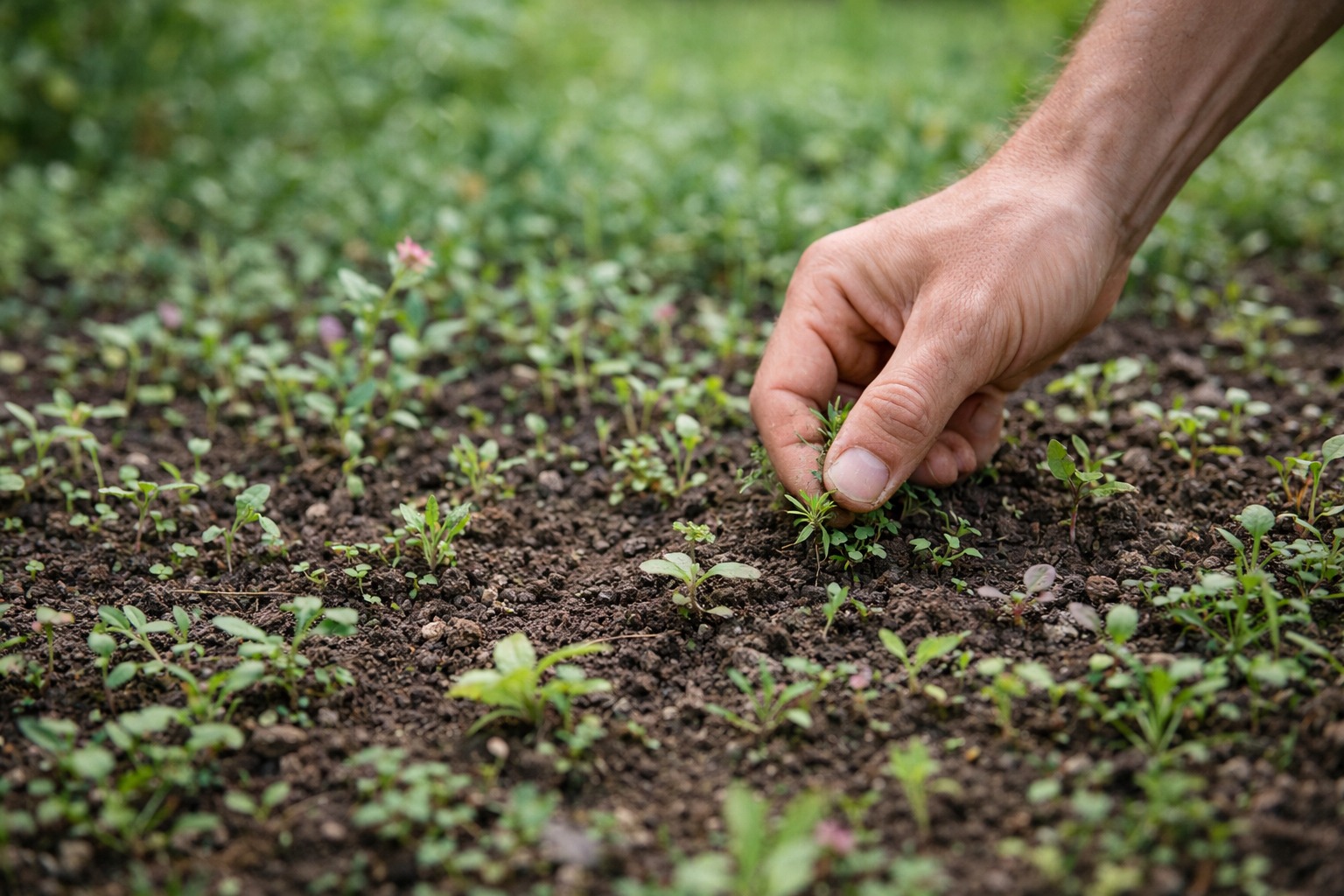
If I can identify obvious problem weeds, hand-pulling is one of the safest tools. I do not need to pull everything. I focus on:
- weeds that grow much faster than the flowers
- weeds that are about to set seed
- weeds directly crowding young seedlings
- invasive or aggressive species
Pull when the soil is slightly moist so roots come out more cleanly. Work slowly so I do not rip out nearby wildflowers by accident.
Do not disturb the whole patch
This is where beginners often make things worse. They start hoeing, raking, or digging through the area once weeds appear. That can uproot the very seedlings they are trying to save.
Wildflower patches do better with targeted intervention, not constant disturbance. The more I stir soil around, the more buried weed seeds I may bring to the surface.
Remove seed heads before weeds spread
Even if I cannot pull a weed fully, cutting off seed heads matters. A weed that drops thousands of seeds becomes next year’s problem too. Stopping that cycle is a huge win.
This is especially helpful late in the season when some weeds are too tangled to remove cleanly.
Be patient with perennials
Some perennial wildflowers are easy to misjudge in year one. They may stay low, make a rosette of leaves, or seem unimpressive while building roots. If I expect instant flowers from every plant, I may accidentally remove the ones I actually wanted.
This is one reason it helps to keep seed packet notes, a planting list, or a rough map. The more I know what I sowed, the easier it is to avoid pulling the right plants.
Use mulch carefully, if at all
Traditional mulch is tricky in direct-sown wildflower patches. Thick mulch can block tiny seedlings or make reseeding harder. Around the edges or in more decorative plantings, a light approach may help, but in meadow-style sowings I usually rely more on mowing, spot weeding, and patience than heavy mulch.
Watering affects weeds too
If I keep the patch constantly wet long after establishment, I may help weeds as much as flowers. New wildflowers need moisture while establishing, but once seedlings are up and rooted, I should avoid turning the area into a soft, overwatered weed nursery.
This is another reason early watering should be purposeful, not automatic.
The first season is different from later seasons
A wildflower patch usually needs the most attention in year one. After that, the goal shifts from “protect every tiny seedling” to “help the patch stay balanced.”
Once flowers establish, they compete better. The patch often becomes easier to manage than it looked at the beginning.
A simple weed-control routine for beginners
If I wanted a no-drama plan, I would do this:
Check the patch once or twice a week. Look for weeds that are clearly taller, faster, or denser than the wildflowers. Pull or clip the worst ones first. Remove seed heads before they mature. Avoid digging up the whole area. Let the patch develop instead of expecting instant perfection.
That approach is simple, realistic, and much easier to maintain.
What not to do
Avoid these common mistakes:
- pulling everything green because I cannot identify it
- mowing too low
- disturbing the whole patch repeatedly
- expecting full bloom immediately
- letting obvious weeds go to seed
Wildflowers reward patience, but they still need protection during establishment.
Final thoughts
A wildflower patch does not fail just because weeds show up. Weeds are part of the process, especially in the first season. The goal is not to eliminate every unwanted plant. The goal is to keep weeds from stealing the patch before the wildflowers can settle in.
A little regular attention goes a long way. If I stay calm, remove the worst troublemakers, and avoid overreacting, a messy new patch can still turn into a beautiful one.