
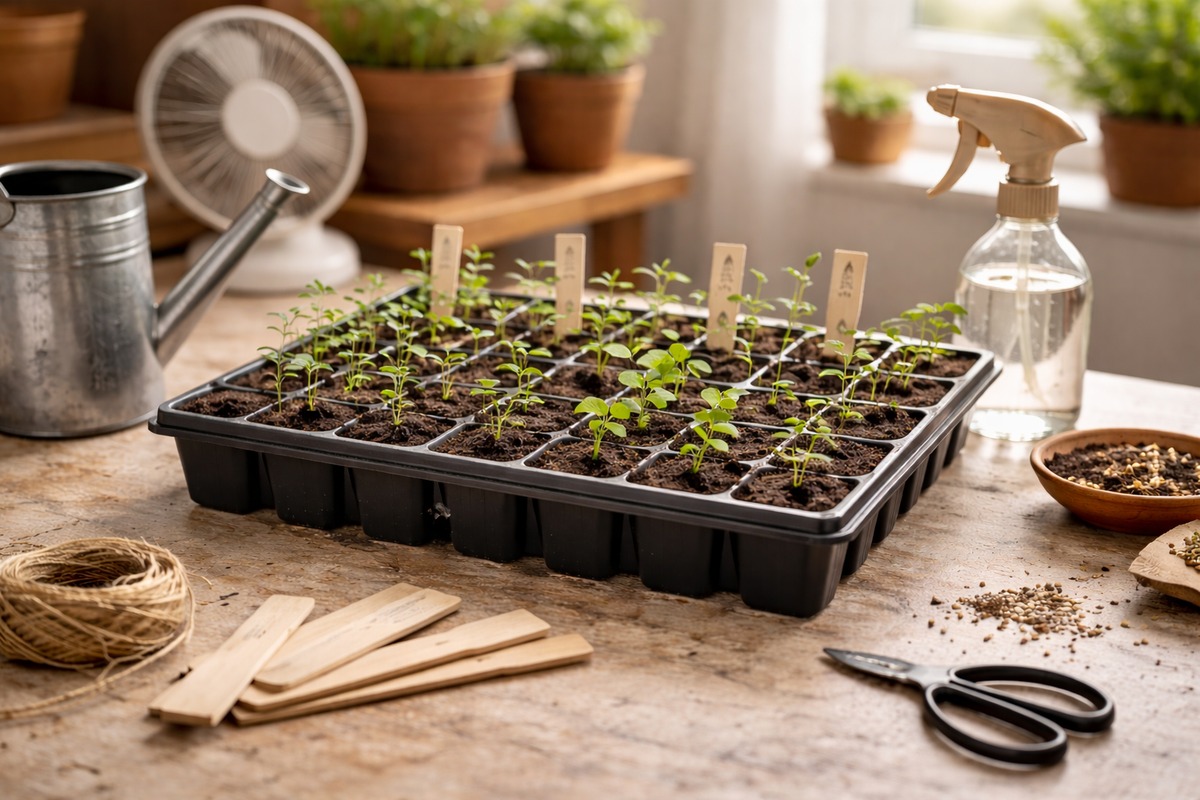
Why seed starting “fails” (even when you follow the packet)
Seed packets make it look simple: plant, water, wait. But indoors, seedlings depend on a balance of light, moisture, airflow, and temperature. If one part is off—even slightly—you can get weak plants, disease, or stalled growth.
The good news: most problems have a fast, practical fix. Below are the 15 mistakes that cause the majority of seed-starting headaches in any U.S. state—plus what I do to correct them.
Mistake #1: Starting seeds too early
What it looks like: seedlings outgrow their pots, get tall and stressed, and transplant poorly.
Why it happens: I start based on excitement, not on frost dates.
Quick fix:
- Use a “weeks before last frost” schedule (peppers 10–8, tomatoes 8–6, brassicas 6–4).
- If I already started too early: pot up (bigger container) and improve light.
Mistake #2: Not enough light (the #1 cause of leggy seedlings)
What it looks like: tall, thin stems; seedlings lean toward the window.
Why it happens: windows are rarely bright enough in late winter/early spring.
Quick fix:
- Add a light source (even a simple setup).
- Keep lights close to the seedlings (raise as they grow).
- Aim for 14–16 hours/day.
Mistake #3: Lights too far away
What it looks like: seedlings still stretch even with grow lights.
Why it happens: the light is overhead but not close enough to the leaves.
Quick fix:
- Move the light closer and re-check daily for the first week.
- If plants are already leggy, fix light first, then consider potting up.
Mistake #4: Overwatering (constant soggy soil)
What it looks like: fungus gnats, algae, moldy surface, weak roots.
Why it happens: I water on a schedule, not based on soil moisture.
Quick fix:
- Water from the bottom (tray) and let the surface dry slightly.
- Make sure containers have real drainage holes.
- Use airflow (small fan) to keep the surface from staying wet.
Mistake #5: Underwatering (letting trays fully dry out)
What it looks like: wilted seedlings, crispy edges, stunted growth.
Why it happens: indoor heat + shallow trays dry fast, especially near vents.
Quick fix:
- Check moisture daily (especially sunny windows or heated rooms).
- Bottom water until soil is evenly damp, then drain the excess.
Mistake #6: Poor airflow (invites disease)
What it looks like: damping-off, mold, weak stems.
Why it happens: stagnant air + wet soil = perfect conditions for fungus.
Quick fix:
- Add gentle airflow (a small fan on low nearby).
- Avoid sealing trays too long under humidity domes once seedlings sprout.
Mistake #7: Using the wrong soil (too heavy or dirty)
What it looks like: slow germination, seedlings struggle or rot, compacted soil.
Why it happens: garden soil is dense and can carry pathogens.
Quick fix:
- Use a light seed-starting mix or a fine potting mix.
- If soil stays muddy: mix in a lighter component next time and avoid packing it down.
Mistake #8: Planting too deep (or too shallow)
What it looks like: seeds don’t emerge; tiny seeds wash away.
Why it happens: depth isn’t matched to seed size.
Quick fix:
- Rule of thumb: plant 2–3× the seed’s thickness.
- Tiny seeds: surface sow + light press + gentle misting.
Mistake #9: Forgetting to label
What it looks like: “mystery seedlings” that become a guessing game.
Why it happens: I assume I’ll remember.
Quick fix:
- Label immediately (crop + variety + date).
- If I forgot: separate trays as soon as possible and write notes before they look identical.
Mistake #10: Inconsistent temperatures during germination
What it looks like: patchy germination; some sprout, others don’t.
Why it happens: I move trays around or the room swings hot/cold.
Quick fix:
- Keep germinating trays in a stable spot (warm, not drafty).
- Once sprouted, move to brighter light and slightly cooler temps.
Mistake #11: Leaving a humidity dome on too long
What it looks like: fuzzy mold, weak stems, damp soil.
Why it happens: domes trap humidity even after sprouts emerge.
Quick fix:
- The moment most seeds sprout: vent the dome, then remove it.
- Increase airflow and reduce surface moisture.
Mistake #12: Not thinning seedlings
What it looks like: crowded plants competing for light and nutrients.
Why it happens: I feel bad removing seedlings.
Quick fix:
- Snip extras at soil level (don’t pull and disturb roots).
- Keep the strongest plant(s) per cell/pot.
Mistake #13: Fertilizing too early (or too strong)
What it looks like: burned tips, stalled growth, “crispy” edges.
Why it happens: seedlings don’t need strong feeding right away.
Quick fix:
- Wait until seedlings have true leaves (not just seed leaves).
- Start with a very light feed and watch response.
Mistake #14: Not potting up when roots need space
What it looks like: seedlings stop growing, pale leaves, roots circle the bottom.
Why it happens: I keep plants in tiny cells too long.
Quick fix:
- Pot up into a slightly larger container with fresh mix.
- After potting up, give good light and steady moisture.
Mistake #15: Skipping hardening off
What it looks like: leaves burn, plants flop, growth stalls after transplant.
Why it happens: indoors is protected; outdoors is sun + wind + temp swings.
Quick fix:
- Do a 7–10 day hardening-off routine:
- start with shade + short time
- increase sun exposure gradually
- protect from wind and cold nights
Quick troubleshooting guide (fast diagnosis)
- Tall + thin: more light / closer light / less heat
- Mold/algae: less water + airflow + remove dome
- Yellow leaves: could be low nutrients or overwatering (check roots + moisture)
- Stalled growth: pot up + better light + consistent watering
- Seedlings collapsing at soil line: reduce moisture, increase airflow, restart with cleaner conditions