
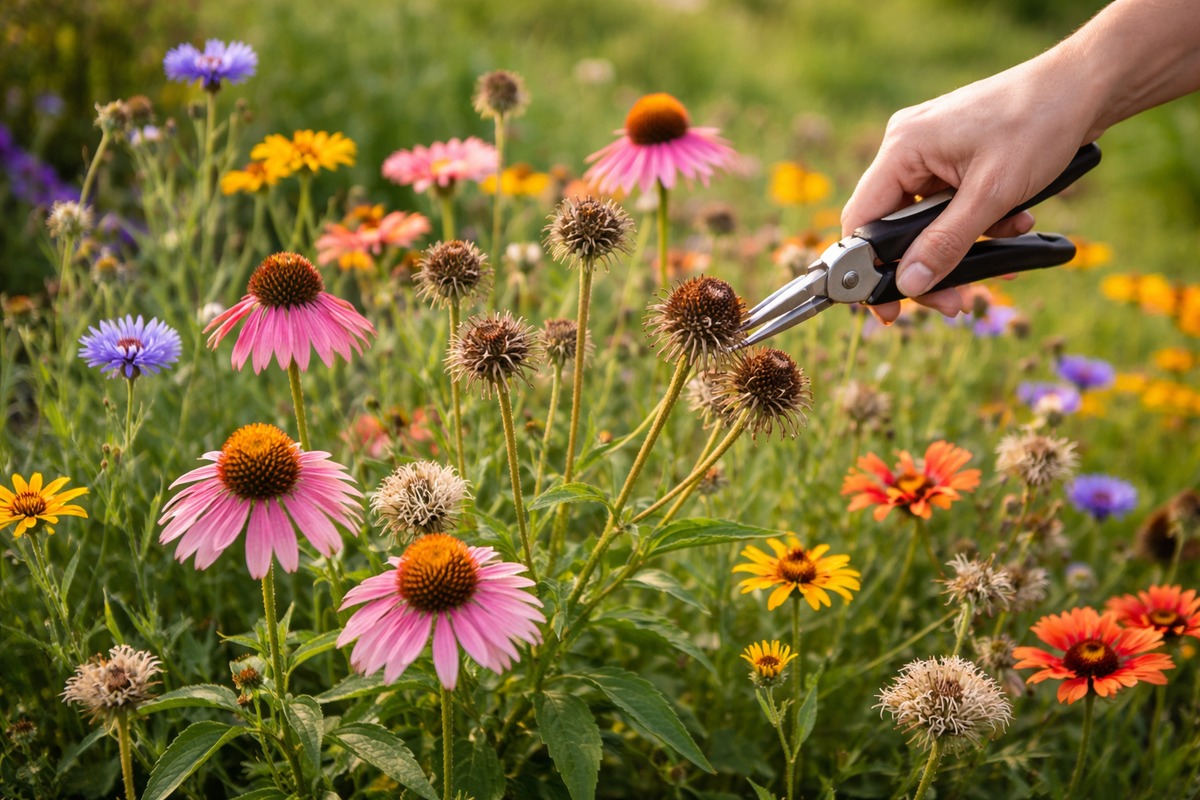
Should I Deadhead Wildflowers? When to Cut Blooms and When to Leave Seed Heads
Wildflowers are often sold as the low-maintenance, carefree side of gardening. That is true in many ways, but beginners still run into one confusing question once flowers start blooming:
Should I deadhead them, or should I leave them alone?
The answer is not the same for every planting. Some wildflowers keep blooming longer if I remove spent flowers. Others are better left alone so they can set seed, feed birds, or reseed naturally. If I cut everything too early, I may lose future seedlings or shorten the natural life of the patch. If I never tidy anything, the planting can look messy sooner than I want.
The trick is knowing what I want from the patch.
What deadheading means
Deadheading simply means removing faded flowers before they fully mature into seed. Gardeners do this to keep plants looking cleaner and, in some cases, to encourage more blooms.
In a formal flower bed, deadheading is often routine. In a wildflower patch, it is more optional and more strategic.
Why some gardeners deadhead wildflowers
There are a few good reasons to do it.
- to keep the patch looking tidier
- to encourage repeat blooming on some annuals
- to prevent certain plants from self-seeding too aggressively
- to extend color in small decorative plantings
This is especially useful when wildflowers are growing near a front walkway, patio, mailbox garden, or other visible area where I want a cleaner look.
Why some gardeners leave seed heads
There are also strong reasons to leave spent blooms in place.
- seeds can feed birds
- plants may reseed naturally
- seed heads add texture
- pollinator-friendly gardens often benefit from a less manicured approach
- some perennial wildflowers are part of a longer seasonal cycle that looks best when left intact
In a more natural planting, leaving seed heads often makes more sense than deadheading everything.
The big question: what is my goal?
Before I cut anything, I ask myself what I want most from the wildflower patch.
If I want a neater look and more repeat bloom, I deadhead selectively.
If I want reseeding, wildlife value, and a natural look, I leave more seed heads in place.
If I want both, I can do a mix.
That mixed approach is often the best beginner strategy.
Good times to deadhead
Deadheading makes the most sense when:
- the bloom is clearly finished
- the planting is small enough to manage easily
- I want to keep flowers coming in a decorative space
- a plant tends to bloom again after cutting
- I do not want that plant spreading heavily by seed
This is often easier in smaller intentional patches than in big meadow-style sowings.
Good times to leave flowers alone
I usually leave seed heads when:
- I want natural reseeding
- birds are using the area
- the planting is informal
- the flowers still look structurally attractive
- the patch is large enough that hand-deadheading everything would be unrealistic
Wildflower gardens do not need to behave like formal bedding displays.
Deadheading annual vs perennial wildflowers
This is where beginners often get confused.
Annual wildflowers often respond well to deadheading if the goal is longer flowering. Removing spent blooms can encourage the plant to keep trying.
Perennial wildflowers may be a little different. Some still benefit from tidying, but many are also valuable for their seed heads, structure, or longer-term establishment.
This does not mean annuals should always be cut and perennials should always be left. It just means I pay attention to the kind of planting I am managing.
A smart beginner approach: partial deadheading
If I do not want to make the wrong choice, partial deadheading is a great compromise.
I can:
- deadhead plants near the front edge for a cleaner look
- leave some seed heads deeper in the patch
- tidy up the most obvious spent blooms
- let late-season flowers mature naturally
This keeps the planting attractive while still supporting reseeding and wildlife.
Will deadheading stop reseeding?
Yes, sometimes. If I remove all spent blooms before seed matures, the plant obviously cannot drop viable seed in that spot. That is why cutting everything all season may reduce the self-sowing effect many gardeners actually want from wildflowers.
If I like the idea of the patch returning and drifting naturally, I should leave at least some flowers to finish their cycle.
What about seed heads in fall and winter?
Many seed heads are useful and beautiful even after bloom time. They can add structure, movement, and habitat value. For a beginner, it helps to stop thinking of “finished flowers” as instantly useless. In a wildflower garden, the seed stage is often part of the beauty.
Common beginner mistakes
Cutting everything too early
This is the biggest one. A spent bloom may still be part of the reseeding cycle.
Never tidying anything
A little selective cleanup can improve appearance without ruining the patch.
Expecting a wildflower patch to act like a formal flower bed
Wildflowers are usually at their best when allowed to be a little looser and more seasonal.
Removing seed heads I actually wanted for birds or reseeding
This often happens when I tidy on autopilot instead of with a goal in mind.
A simple rule that works
If I want a neat decorative patch, deadhead more.
If I want natural reseeding and habitat value, deadhead less.
If I want both, deadhead selectively and leave plenty of seed heads by late season.
That simple rule covers most situations.
Final thoughts
Deadheading wildflowers is not a strict rule. It is a choice based on what I want the planting to do. Some gardens benefit from tidying and repeat bloom. Others are better when left to reseed, feed wildlife, and move through a full natural cycle.
A wildflower patch does not need perfect grooming to succeed. Usually, the best approach is light, thoughtful editing instead of cutting everything or ignoring everything.