
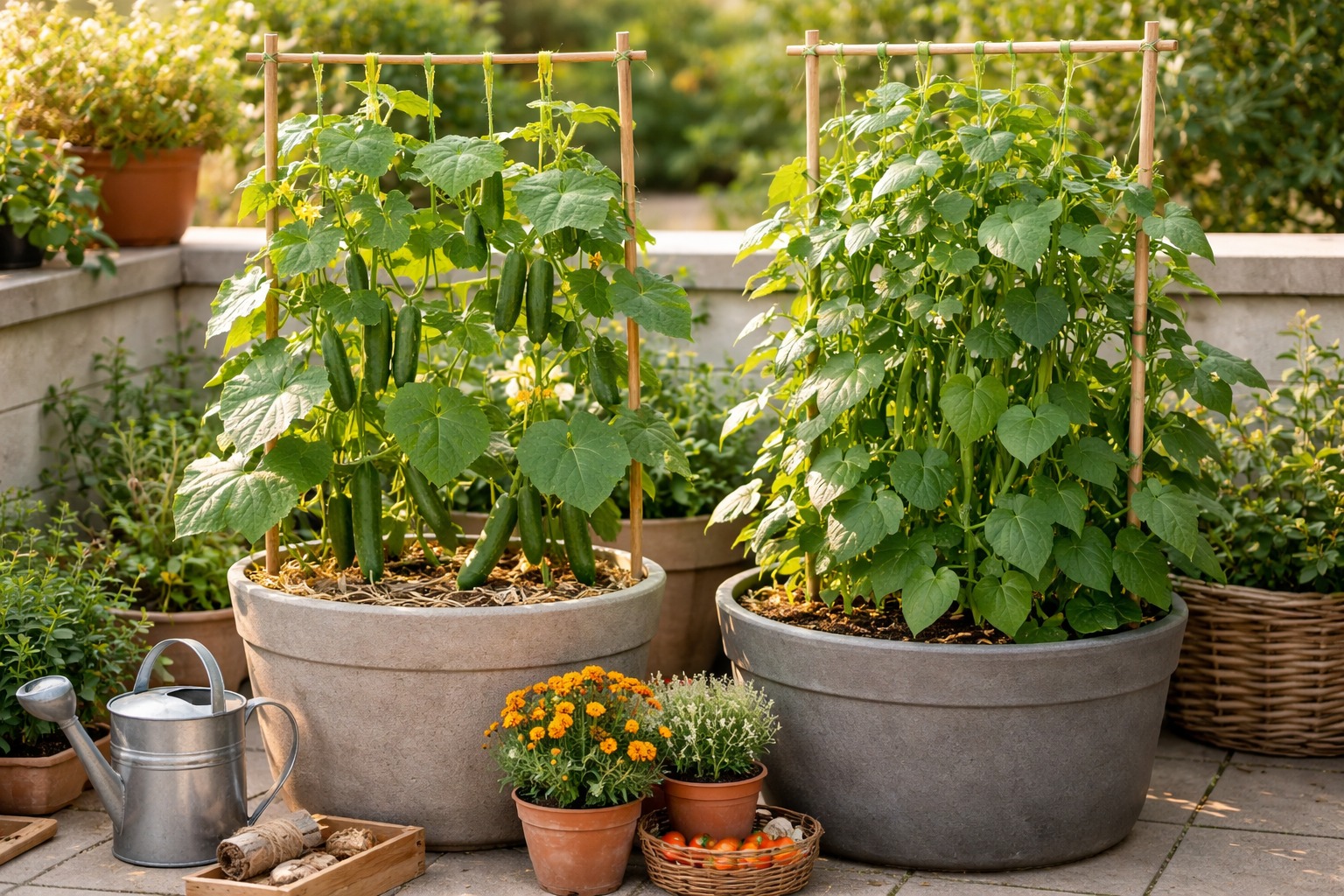
How to Support Cucumbers and Beans in Containers Without a Mess
Cucumbers and beans are exciting container crops because they grow fast and make a small space feel productive. The problem is that they also sprawl, lean, flop, and tangle if I do not give them support early.
This is one of those gardening jobs that is much easier when I do it before things get messy. Once vines are long, curling, and grabbing onto each other, it becomes harder to organize them without snapping stems or creating a frustrating knot of growth.
The good news is that I do not need a fancy setup. A simple, stable support system works well.
Why support matters in containers
Support is not just about neatness. It also helps with plant health.
When cucumbers and beans climb instead of sprawl:
- leaves get better airflow
- plants are easier to water around
- fruit stays cleaner
- harvesting gets easier
- disease pressure may be lower
- the container garden looks more organized
For small patios and balconies, vertical growing is one of the smartest ways to get more from limited space.
Put support in place early
This is the biggest tip. Add support when the plant is still young. If I wait until vines are already long, I end up trying to force the plant into a shape it did not naturally choose.
Early support lets the plant grow into the structure instead of fighting it later.
Good support options for containers
The best support depends on the size of the plant, the size of the pot, and how much wind the area gets.
Trellises
A trellis is one of the easiest and cleanest options for both cucumbers and beans. It gives vines clear direction and works especially well behind a pot or attached firmly within it.
Teepees
A teepee made from stakes or poles works well for beans and some compact cucumbers. It is simple, classic, and effective.
Wire panels or mesh
Wire supports can be very sturdy and give vines plenty of places to grab. They are useful when I want something stronger than string alone.
Strings with a stable frame
Some gardeners like strings hanging from above, but for beginners this is easiest when the top anchor is truly secure. If not, the setup can shift under the weight of the plant.
Choose a support that matches the container
This part matters. A tall trellis in a tiny lightweight pot can become unstable quickly. The support and the container need to work together.
If I am growing a vigorous vining crop, I want:
- a container heavy enough to stay put
- support anchored securely
- enough room in the pot for roots and stability
A support system is only useful if it stays upright in wind and watering.
Supporting cucumbers in pots
Cucumbers grow quickly and can get surprisingly heavy once fruit develops. A sturdy vertical support keeps vines off the ground and makes harvesting easier.
When training cucumbers, I gently guide vines toward the trellis and help them find places to climb. Some varieties grab easily with tendrils. Others need a little encouragement at first.
Compact or patio cucumber varieties are usually easier in containers than large, aggressive vines.
Supporting beans in pots
Pole beans are the main type that need real support. Bush beans usually stay compact enough without it.
Pole beans climb readily, which makes them satisfying for beginners. Once they find the structure, they often do much of the work themselves. Teepees, trellises, and upright poles all work well as long as they are stable.
What to use to tie plants
If a vine needs help, I use soft ties and keep them loose. I do not want to pinch or cut into stems as they grow.
The goal is gentle guidance, not tight restraint.
Common support mistakes
Waiting too long
By the time a vine has sprawled across the patio, support becomes much harder to add neatly.
Using a flimsy structure
A weak support may look fine early, then lean or collapse once plants gain size.
Forgetting wind
Balcony and patio gardens can get windy. A tall support needs real stability.
Forcing vines too aggressively
It is easy to snap stems if I bend them too sharply. I guide slowly and let the plant do most of the climbing.
Choosing a huge vine for a tiny pot
Even the best support cannot fix a badly mismatched plant and container.
A simple beginner setup that works
If I wanted the easiest low-stress option, I would choose a sturdy container, add a simple trellis at planting time, and pick a compact cucumber or a pole bean variety that is known to climb well.
Then I would check the vines every few days and gently guide them upward before they wander too far.
That alone solves most of the mess.
Harvesting is easier when plants are trained
This is one of the most underrated benefits. A supported plant is easier to inspect, easier to pick, and easier to keep healthy. I can spot missed cucumbers sooner, find beans more easily, and notice problems before they spread.
Unsupported vines tend to hide fruit, trap moisture, and make routine care more annoying than it needs to be.
Final thoughts
Cucumbers and beans can do very well in containers, but they are much easier to manage when I support them from the start. The right setup does not need to be complicated. It just needs to be sturdy, sized appropriately, and added early enough that the plant can grow into it.
A little vertical structure saves a lot of trouble later. It also makes a small-space garden feel cleaner, more productive, and easier to enjoy.