
Why watering matters most in the first month
Once wildflowers are established, many are surprisingly drought-tolerant. But at the beginning, seeds and tiny seedlings have shallow roots and dry out fast.
So wildflower watering has two phases:
- Germination + tiny seedlings (weeks 0–3) → consistent surface moisture
- Establishment (weeks 3–6+) → less frequent, deeper watering
If I keep the right moisture pattern early, everything gets easier later.
Step 1: Understand what seeds actually need
Seeds don’t need deep watering. They need:
- moisture around the seed coat
- oxygen (not swamp conditions)
- stable conditions long enough to sprout
That’s why the best early watering is light and frequent, not one heavy soak that compacts the surface.
My first-month wildflower watering routine
Day 0–7: right after sowing
My goal is to keep the top layer lightly moist.
What I do:
- water gently right after sowing (fine spray)
- water again whenever the surface starts to dry
- avoid blasting seed (seed can wash into piles)
In sunny weather, that may mean:
- 1–2 light waterings per day
In cool or rainy weather:
- I water less (sometimes not at all)
Rule: I want “damp,” not “muddy.”
Week 2–3: germination starts
Once sprouts appear, I keep moisture steady but start spacing watering slightly.
What I do:
- continue gentle watering
- avoid long dry spells (seedlings can die quickly)
- watch for crusting (hard soil surface is a problem)
If the surface forms a crust, I water more gently and more often to keep it from hardening.
Week 3–4: shift toward deeper watering
By now, seedlings are trying to push roots down. This is when I transition.
What I do:
- water less often
- water a bit deeper (still gentle)
- allow the surface to dry slightly between waterings
This encourages deeper roots and reduces fungus/mold pressure.
Week 4+: establishment mode
At this point I treat the patch more like a normal planting.
What I do:
- water deeply when needed
- let the area dry more between waterings
- rely more on rain, less on constant attention
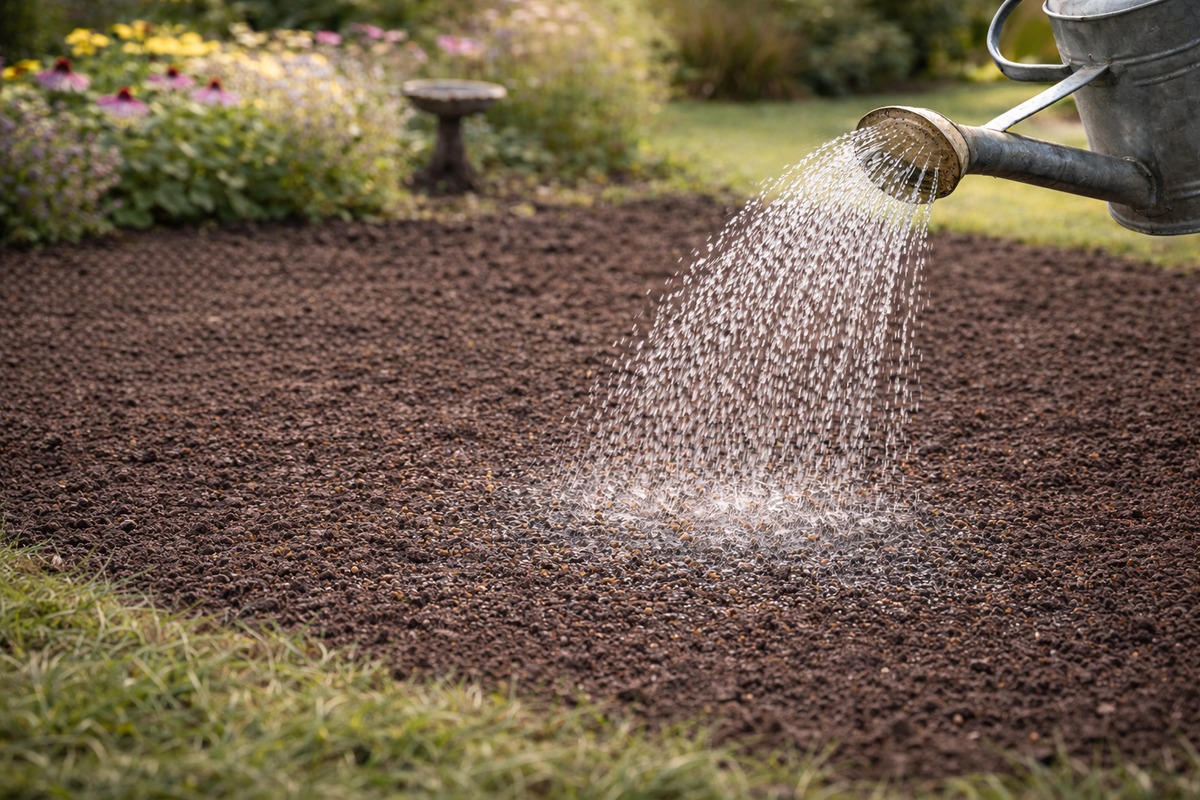
How I water without washing seed away
Best tool: a gentle spray
I avoid strong jets early. I use:
- shower/spray setting on a hose
- watering can with a rose head
- gentle sprinkler for larger patches (if it doesn’t puddle)
Goal: no craters, no runoff channels, no seed piles.
The 3 checks I use before watering
1) Surface feel
If the top feels dry and dusty, I water lightly.
2) Soil just below the surface
If it’s slightly moist 1 inch down, I can often wait.
3) Weather forecast (my shortcut)
If rain is coming in the next 12–24 hours, I often hold off so I don’t overwater.
Adjusting for soil type (this changes everything)
Sandy soil
- drains fast
- dries fast
In sandy soil, I:
- water more frequently early on
- consider a very thin mulch layer after seedlings are up (not thick)
Clay soil
- holds water longer
- crusts easily
In clay soil, I:
- water gently to avoid crusting
- water less often to avoid sogginess
- focus on good prep so the surface is not a hard pan
Loamy soil (ideal)
- holds moisture but drains
This is the easiest situation. I still follow the two-phase watering plan.
Sun and wind make seedlings “thirsty” even if soil is moist
Hot sun and wind can dry seedlings quickly.
What helps:
- water early in the day
- light windbreaks if it’s a windy spot
- avoid late-day heavy watering that keeps things wet overnight (if disease is a concern)
How to spot watering problems early
Signs I’m underwatering
- patchy germination (especially in hot weather)
- seedlings shrivel and disappear
- surface becomes dusty and dry daily
- soil pulls away and cracks
Fix:
- increase frequency of gentle watering
- water earlier in the day
- improve seed-to-soil contact (press seed in next time)
Signs I’m overwatering
- soggy surface that never dries
- algae or green slime
- mold patches
- seedlings look weak and pale
- fungus gnats (less common outdoors but possible)
Fix:
- reduce watering frequency
- water earlier so surface dries faster
- improve drainage and avoid puddles
Should I mulch wildflower seeds?
Usually I don’t mulch at sowing, because mulch can block tiny seeds from light and soil contact.
But after seedlings are a few inches tall, a very thin mulch can help:
- reduce evaporation
- reduce soil splash
- stabilize moisture
I keep it thin so it doesn’t smother seedlings.
What about watering in fall sowing?
For fall sowing, I often water once right after sowing if soil is dry. After that, nature usually handles it.
In spring, I monitor moisture as germination starts.
FAQ
How long do I need to water wildflowers?
Usually the first 4–6 weeks matter most. After that, many wildflowers become much more resilient.
Can I use a sprinkler?
Yes, if it’s gentle and doesn’t create runoff or puddles.
Why is germination patchy?
Patchiness often comes from uneven soil contact, inconsistent moisture, or seed washing into clumps. Watering routine + good prep helps a lot.
Quick wrap-up
My wildflower watering success is simple:
- light, gentle moisture early
- shift to deeper, less frequent watering once seedlings are up
- adjust for sun, wind, and soil type
- avoid washing seed away
If I keep the first month consistent, wildflowers usually take off.