
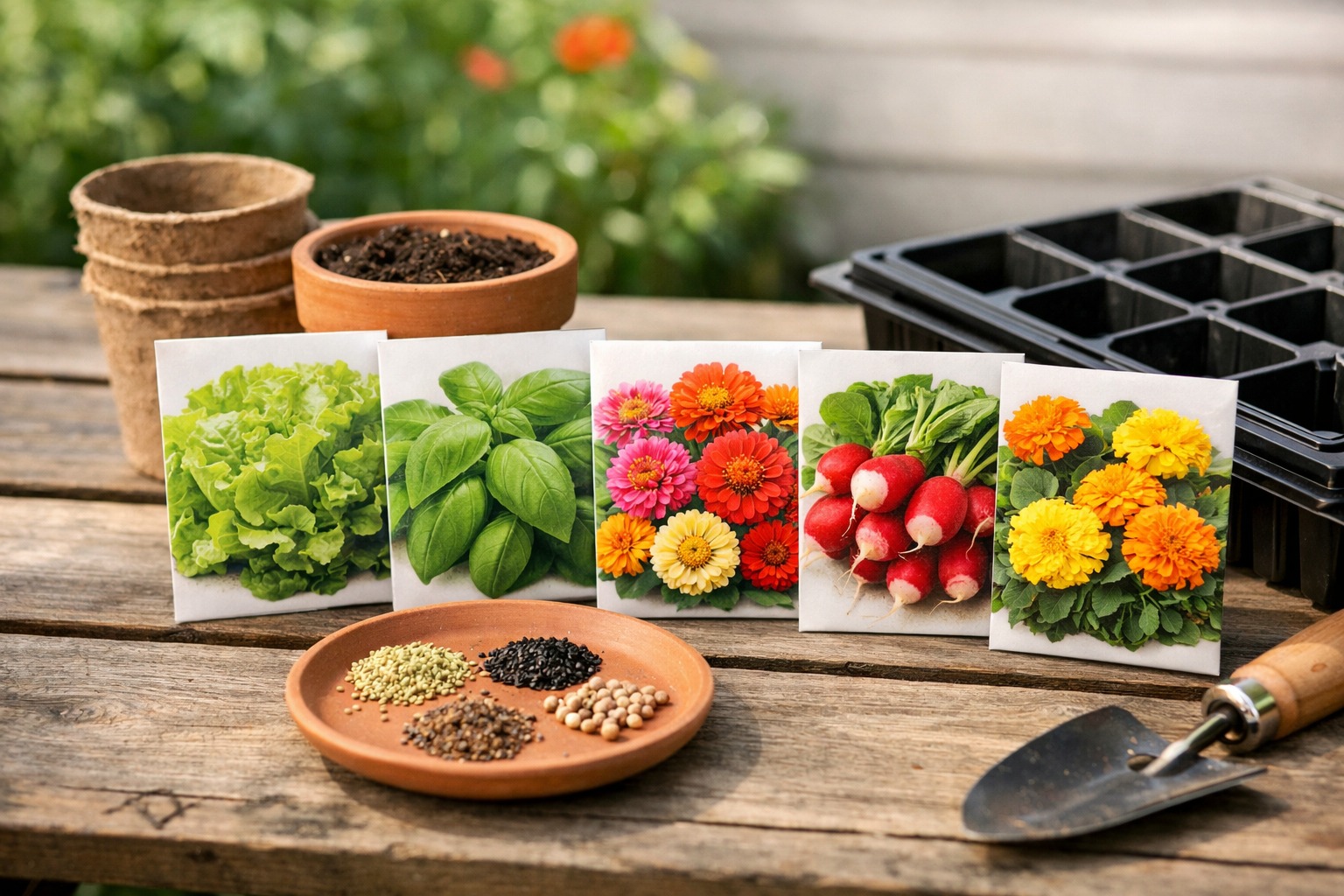
What to Grow First: 10 Easy Seeds for Beginner Gardeners
One of the biggest beginner mistakes is trying to grow everything at once. I get excited, buy too many seeds, and then end up overwhelmed by trays, labels, watering, and too many decisions. A much better way to start is simple: grow a few easy crops first, learn how they behave, and build confidence from there.
The good news is that some seeds are much more beginner-friendly than others. They sprout reliably, grow fast enough to keep me motivated, and do not punish every small mistake. That matters when I am just starting out.
If I wanted a smooth first season, these are the kinds of seeds I would start with.
What makes a seed beginner-friendly?
Easy seeds usually have a few things in common. They germinate well, they do not need complicated care, and they recover more easily from beginner mistakes. They also tend to grow fast enough that I can actually see progress.
That matters more than people realize. When something sprouts quickly and starts looking like a real plant, it keeps me interested. Slow, fussy crops can make a beginner think they are bad at gardening when the truth is just that they picked a harder plant.
1. Lettuce
Lettuce is one of the easiest wins in a beginner garden. It sprouts quickly, grows fast, and works in containers, raised beds, and even shallow planters. It also does not need a huge setup.
Loose-leaf lettuce is especially beginner-friendly because I can harvest a few leaves at a time instead of waiting for one perfect head. That means I get food sooner and for longer.
Why it is a good first crop:
- fast to sprout
- forgiving
- good for small spaces
- easy to re-sow if I make a mistake
2. Radishes
If I want quick results, radishes are hard to beat. They come up fast and give me something harvestable in a short time. They are great for beginners because they make gardening feel real very quickly.
They also teach useful lessons. If I crowd them, ignore watering, or use poor soil, they show me. But they show me fast, which helps me learn.
3. Bush Beans
Bush beans are productive, simple, and satisfying. They usually germinate well in warm soil and do not need complicated support like pole beans do. If I want a vegetable that feels generous, beans are a strong choice.
They are also nice for beginners because the seeds are large and easy to handle.
4. Zinnias
For flowers, zinnias are one of the easiest beginner seeds I can grow. They sprout well, bloom brightly, and keep going if I cut flowers regularly. They are cheerful, forgiving, and rewarding.
If I want confidence fast, zinnias help. They make a beginner garden feel colorful and successful even when everything else still looks small.
5. Sunflowers
Sunflowers are simple, dramatic, and fun. Bigger seeds are easier to sow, and the plants grow fast enough to feel exciting. They are especially good if I want kids involved or just want a low-stress flower to enjoy.
I do need to protect very young seedlings from pests in some gardens, but overall they are still one of the easiest flowers to start with.
6. Basil
Basil is a great first herb because it is useful, smells good, and grows quickly in warm conditions. It does best when I harvest it regularly, which makes it feel interactive and rewarding.
It is especially good for containers if I want something productive on a patio or balcony.
7. Arugula
Arugula is another easy green for beginners. It grows quickly, takes up little space, and can be harvested young. If lettuce feels too ordinary, arugula gives a little more flavor while staying easy to grow.
It is a great option for repeat sowing, too. I can plant a little, harvest it, and sow more.
8. Marigolds
Marigolds are one of the easiest flowers for beginners who want something bright and low-stress. They germinate well, tolerate heat, and work in containers or garden beds.
They also make a nice “confidence crop” because they keep blooming and do not usually require fussing.
9. Cucumbers, if I have enough warmth and space
Cucumbers are not quite as foolproof as lettuce or radishes, but they can still be a good beginner crop if I have warm weather, sun, and enough room. They grow fast and feel very productive once they get going.
For a beginner, bush or compact varieties are often easier than huge vines.
10. Nasturtiums
Nasturtiums are a wonderful beginner flower because they are easy, useful, and a little different. They grow quickly, do well in containers, and have edible flowers and leaves. They also look charming spilling over pot edges.
They are especially good if I want something beautiful without needing a lot of perfection.
How to choose the best first seeds for my space
Not every easy seed is right for every setup. A better question than “What is easiest?” is “What is easiest for the space I actually have?”
If I have a balcony or patio, lettuce, basil, marigolds, nasturtiums, and compact beans make sense. If I have room in the ground, radishes, beans, zinnias, and sunflowers are easy wins. If I want edible results fast, greens and radishes are great. If I want beauty and motivation, flowers like zinnias and marigolds are excellent.
A smarter beginner strategy: start small
I do not need ten seed packets going at once just because ten things are easy. In fact, I would recommend the opposite. Start with three to five.
A simple first mix could be:
- one fast edible crop
- one herb
- one flower
- one extra plant I am personally excited about
That gives me enough variety to learn without turning the season into homework.
Seeds beginners often find harder
This is not because these plants are impossible. They are just less forgiving for a first try.
Common tougher beginner crops include:
- celery
- onions from seed
- long-season peppers
- head cauliflower
- finicky specialty flowers
- large plants started too early indoors
The problem is not the beginner. The problem is that some seeds simply ask for more patience, more timing accuracy, or more stable conditions.
How to get an early win
If I wanted the highest chance of success, I would do this:
pick one leafy crop, one flower, and one herb. Grow them where I can check them easily. Keep the setup simple. Watch them every day. Learn from what happens.
That is how I build real skill.
A beginner-friendly starter list
If someone asked me for the simplest first garden possible, I would suggest:
- loose leaf lettuce
- radishes
- basil
- marigolds
- zinnias
That combination gives quick growth, good morale, low fuss, and a nice mix of edible and beautiful plants.
Final thoughts
The best first seeds are not the rarest or most impressive ones. They are the ones that help me learn without frustration. Easy seeds build momentum. Momentum builds confidence. And confidence is what turns a beginner into someone who keeps gardening.
I do not need to start big. I just need to start with plants that want to meet me halfway.