
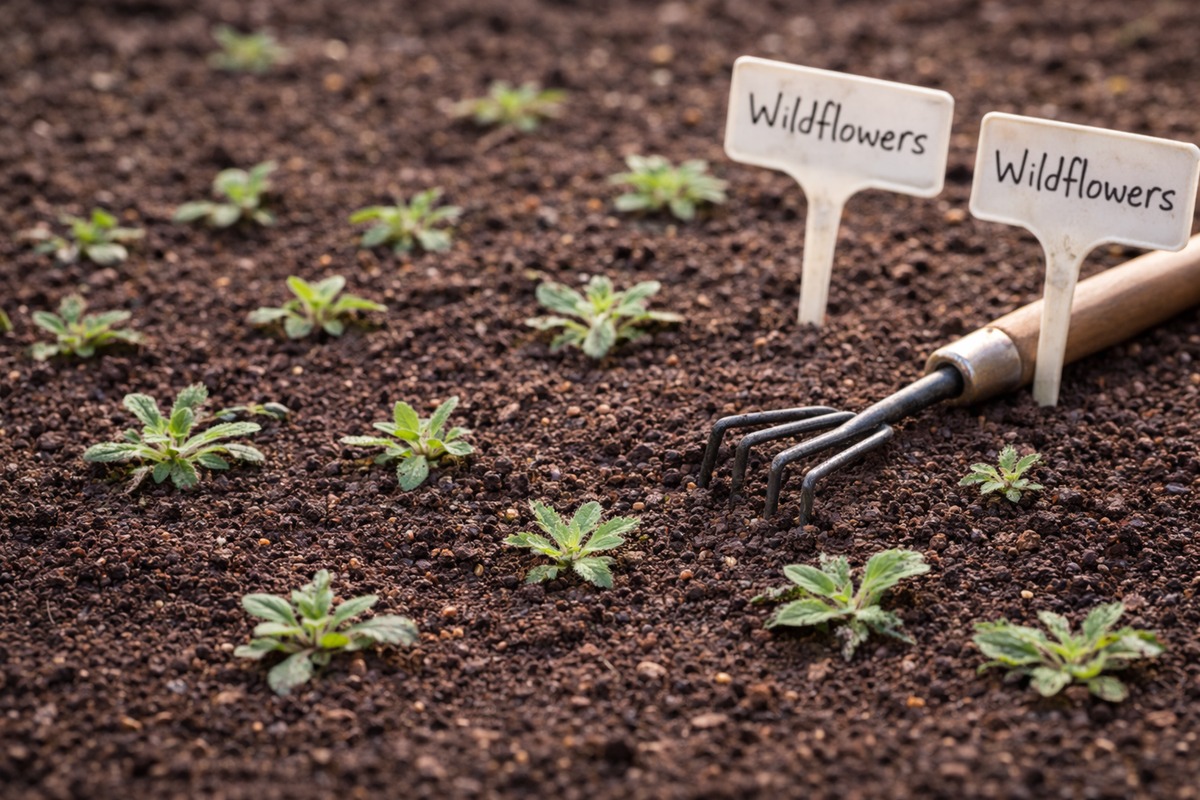
First: wildflowers are naturally uneven (so I don’t panic too fast)
Wildflower germination is often:
- staggered (different species sprout at different times)
- patchy at first (microclimates + soil contact)
- slower than vegetables (especially perennials)
So my first step is giving it a reasonable window:
- annuals: often 7–21 days (varies by species and weather)
- perennials: can take longer and may sprout in waves
But if nothing is happening—or big bare spots stay bare—I troubleshoot.
The 8 most common reasons wildflower seeds don’t germinate
1) Seed never touched soil
This is the #1 cause.
If I sowed on top of:
- grass
- thick thatch
- leaves
- chunky mulch
…many seeds never make contact and dry out.
Fix: prep better next time (expose soil), and press seed into the surface after sowing.
2) I buried the seed too deep
Most wildflower seeds want to be sown very shallow. Some need light to germinate.
If I raked hard or covered with thick soil, germination can drop.
Fix: sow shallow, then press—don’t bury. If I want coverage, use only a dusting of fine soil.
3) Timing was wrong (especially for perennials)
Many perennials need cold stratification. If I sowed them in warm spring without stratification, they may sit dormant.
Fix options:
- fall sow (let winter stratify naturally)
- choose species that don’t require stratification for spring sowing
- be patient if the species is slow
4) Moisture was inconsistent during the first 2–3 weeks
Seeds must stay moist long enough to sprout. If the surface dries repeatedly, germination becomes patchy or fails.
Fix: light, gentle watering to keep the top layer damp until sprouts appear.
5) Heavy rain washed seed into piles (or away)
Broadcast seed can move with runoff, especially on slopes or hard-packed soil.
Fix:
- roughen the surface (tiny grooves catch seed)
- press seed into soil
- avoid watering with strong jets
- use a very light straw sprinkle on slopes (not thick mulch)
6) Soil crusted over (common in clay)
Clay soils can form a hard crust after rain, blocking tiny seedlings.
Fix:
- prep so soil surface is loose and crumbly
- water gently to avoid sealing the surface
- consider adding a thin layer of fine, loose material before sowing so seed sits in a softer top layer
7) Birds/ants ate the seed
It happens—especially with surface-sown seed.
Fix:
- press seed into soil so it’s not sitting exposed
- sow closer to cool weather (less insect activity)
- sow right before light rain so seed settles in
8) Weeds germinated first and took over
Sometimes the patch is “green,” but it’s mostly weeds. Weeds can shade out tiny wildflower seedlings before I even notice.
Fix:
- better prep (reduce weed pressure)
- early weeding (remove tall aggressive weeds fast)
- keep expectations realistic: perennials need more weed help in year one
My quick diagnostic checklist (what I check in 5 minutes)
When I think germination failed, I check:
- Can I see seed on the surface? (or did it wash away?)
- Is the surface crusted or compacted?
- Was the area kept consistently moist?
- What kind of mix did I plant—annuals or perennials?
- Is the green I’m seeing actually weeds?
This usually points to the real cause fast.
What I do if germination is patchy (my rescue plan)
Step 1) Wait just a bit (but not forever)
If I planted a mix, some species may still be coming. I give it:
- an extra 1–2 weeks in mild conditions
- longer if it’s a perennial-heavy mix
Step 2) Fix the surface
If the soil crusted or dried hard, I:
- lightly roughen the surface (very shallow)
- avoid deep disturbance (deep digging brings up weeds)
Step 3) Overseed thin spots
For bare patches, overseeding can work well.
My overseed method:
- lightly rake the spot
- scatter seed
- press it in
- water gently
Step 4) Control weeds immediately
If weeds are shading the area, I remove the worst offenders first. Even a small amount of light makes a big difference for seedlings.
Preventing germination failure next time (my “do this and you’ll win” list)
If I want a strong stand of wildflowers, I focus on:
- good prep (expose soil)
- shallow sowing (press, don’t bury)
- gentle moisture for 2–3 weeks
- timing (fall sow for many perennials)
- weed control early
Wildflowers aren’t hard—competition and moisture are the hard parts.
FAQ
How long should I wait for wildflower seeds to sprout?
It depends on the species. Many annuals sprout within a few weeks. Perennials can take longer and may sprout in waves.
Can old seed fail?
Yes, but most “failures” are still site prep or watering issues. I check the basics first.
Should I fertilize to help germination?
Usually no. Fertilizer doesn’t help seeds sprout and can encourage weeds.
Quick wrap-up
If my wildflower seeds don’t germinate, I don’t assume the seed is bad. I troubleshoot:
- soil contact
- sow depth
- timing (cold stratification)
- consistent moisture
- washout and crusting
- weeds
With a few small fixes, I can turn patchy germination into a real wildflower stand.